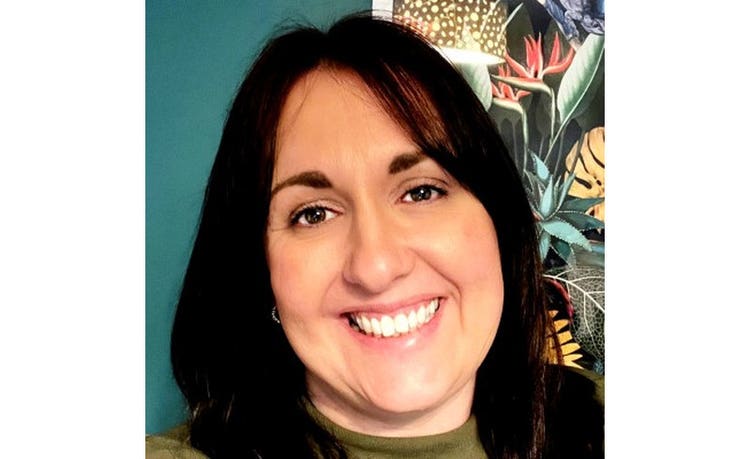
Amy Jones
Part of the IT Leaders 100 - a list of the most influential IT leaders in the UK in 2026.
Amy Jones is Chief Transformation Officer at Emerald Publishing, leading transformation across technology, data, AI, and organisational capability. She is passionate about helping people do their best work by removing friction, simplifying complexity, and building confidence in how technology is used.
Amy is known for her people‑first approach to change, her focus on ethical and responsible AI, and her commitment to developing talent. She is a CIO 100 UK award winner and an active mentor for women in tech.
What's the most exciting part of your current role?
The opportunity to meaningfully help people by fixing the things that get in their way - and then seeing a real, sustained shift in organisational capability as a result.
Much of my work focuses on identifying friction: unclear processes, outdated systems, overloaded teams, or ways of working that no longer serve the organisation or its people. The most rewarding moments come from untangling those issues - listening first, removing complexity, and co‑creating better ways of working that people genuinely understand and own.
I'm especially energised by seeing confidence grow. When teams move from firefighting to feeling in control of their work, when leaders gain clearer insight from data, or when individuals feel supported to build new skills rather than being overwhelmed by change - that's when transformation becomes real. Technology is often the enabler, but people are always the outcome.
Over time, this approach has shifted the organisation's capability: clearer accountability, healthier workloads, stronger collaboration, and teams that are better equipped to adapt rather than wait for fixes from the centre. Knowing that the changes we make today leave people more capable tomorrow is what motivates me every day.
What do you do in week one of a new project to avoid pain in month six?
I focus on clarity, trust, and constraints - because most pain in month six comes from assumptions made early and never revisited.
First, I make the problem explicit. We align on what we're actually trying to fix, what good looks like, and what success will be measured by - not just delivery milestones, but outcomes people will feel. I actively surface tensions, unknowns, and trade‑offs rather than rushing to solutions.
Second, I spend time with the people closest to the work. Listening to teams, understanding where capacity is stretched, and mapping real workflows (not idealised ones) helps avoid designs that look good on paper but fail in practice.
Third, I lock in ownership early. Clear accountability, escalation paths, and principles for making trade‑offs prevent drift and slow‑burn frustration later on.
Finally, I set expectations about learning. I assume we won't get everything right first time, so we agree how we will test, review, and adapt - making feedback safe and continuous.
Getting these foundations right in week one doesn't slow delivery; it accelerates it - and it dramatically reduces rework, burnout, and loss of confidence six months later.
What’s the part of your estate you most want to simplify in 2026?
The end‑to‑end flow of data and work across our core systems - because genuine AI readiness depends far more on clarity and capability than on tools alone.
Over time, complexity creeps in: duplicated systems, unclear sources of truth, manual hand‑offs, and inconsistent data definitions. That complexity doesn't just slow delivery; it undermines trust in insights and makes responsible AI adoption much harder. AI can only add value when the data it relies on is high quality, well governed, and understood.
My focus is on simplifying the foundations: clearly defined system roles, streamlined integrations, fewer bespoke exceptions, and standardised data models that people can rely on. This creates a stable, auditable base where AI can be used safely and effectively to fully augment human effort.
Alongside this technical simplification, we are investing heavily in people through our AI and Data Academy. The Academy builds practical literacy across the organisation - 10% of the organisation is enrolled in the first cohort with more planned through the year.
Excluding smartphones, what piece of technology could you not live without and why?
A pen - or more accurately, the Apple Pencil.
Writing things down helps me slow thinking to the point where it becomes useful. Whether I'm untangling a complex problem, sketching a workflow, or reflecting on people and decisions, putting ideas on a page forces clarity in a way no app or dashboard ever quite manages.
I've shifted much of this to an Apple Pencil because it gives me the flexibility to capture ideas quickly, rearrange them, and link thinking across notes and projects. But when something really matters - a difficult decision, a leadership reflection, or the start of something new - I still reach for a beautiful notebook and a good pen. There's something deliberate about that act that changes how you think.
For all the technology I work with, this remains the tool that helps me make sense of complexity, connect ideas, and think properly before acting. Sometimes the most powerful technology is the one that slows you down just enough to get it right.
What excites you most about the future of IT?
The shift from being primarily about systems and delivery to being fundamentally about capability, judgement, and human impact.
Technology is becoming more powerful and more accessible at the same time, which means the differentiator is no longer who has the most tools, but who understands how to use them well, responsibly, and in service of real outcomes.
IT has a unique opportunity to move closer to the heart of the organisation: helping people make better decisions, reduce friction in their work, and focus energy on what genuinely adds value.
I'm especially excited by the potential for IT to democratise expertise. AI and data platforms can remove barriers to insight, automate the tedious, and give people confidence to experiment and improve - provided we invest equally in skills, ethics, and trust. That's where modern IT leadership matters most.
The future of IT isn't about replacing people; it's about augmenting them. When IT is done well, it creates space for better thinking, better collaboration, and more resilient organisations.
Being able to shape that future - technically and culturally - is what makes this moment genuinely exciting.
What talent are you quietly proud of that would never show up on LinkedIn?
I'm quietly proud of an entirely unofficial talent I've developed for negotiating with a five‑year‑old using logic I don't fully believe in - while maintaining a straight face.
This includes calmly explaining why socks are essential even when dinosaurs didn't wear them, why bedtime is non‑negotiable despite very strong counter‑arguments, and why the "one more story" clause cannot be invoked indefinitely.
It requires creativity, patience, emotional intelligence, and the ability to pivot quickly when a perfectly reasonable explanation is met with, "But why though?" What makes this talent particularly impressive is that it must be deployed under pressure - usually when everyone is tired, time is tight, and the stakes (to a small human) feel incredibly high. Success is measured not in applause, but in partial compliance and the absence of tears - on either side.
There are no certificates for this skill, no endorsements, and no metrics you'd ever put on a CV. But it's taught me empathy, perspective, and how to pick my battles wisely.
Also, I can recite most of the Julia Donaldson books without looking at the pages at this point too.
What’s your most-used keyboard shortcut or command that you wish everyone knew?
Ctrl + Shift + T - reopen the last closed tab.
It sounds small, but it's pure psychological safety for the internet age. Accidentally close the tab - the one with the half‑finished form, the research you'll never find again, or the thing you meant to come back to? One shortcut and it's back, like nothing happened.
I wish everyone knew it partly because it saves time, but mostly because it removes unnecessary stress. There's something deeply reassuring about knowing mistakes are reversible - even digital ones.
It's also a surprisingly good metaphor: progress doesn't require perfection, just the confidence that you can recover when something inevitably goes wrong.
If that feels too philosophical for a keyboard shortcut, I'll also happily nominate Undo (Ctrl + Z) as the most under‑appreciated life skill of all.