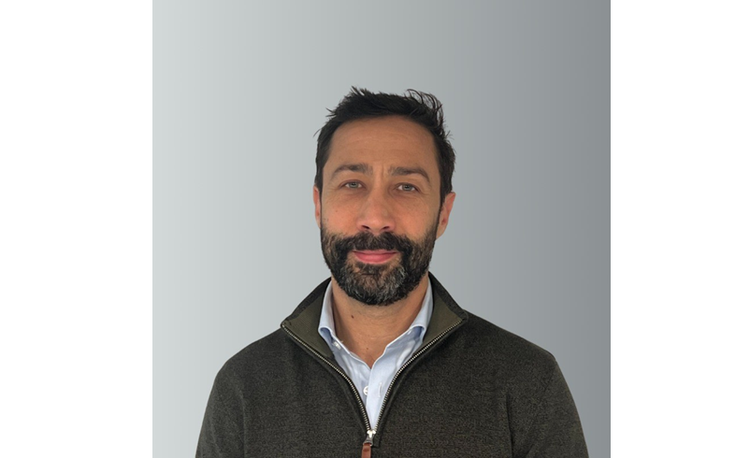
Alex Tindal
Part of the IT Leaders 100 - a list of the most influential IT leaders in the UK in 2026.
Alex is a seasoned CTO with over 19 years of experience across financial services, specialising in Asset & Investment Management, Private Banking and Wealth Management.
Alex has a proven ability to align IT strategy with business goals, driving results through agile methodologies, and is an expert in harnessing AI and data-driven solutions to boost performance and revenue.
Alex’s focus areas include cost control, automation, revenue growth, service excellence and positioning IT as a strategic enabler for business success. He is deeply committed to fostering a strong workplace culture, with a passion for people, diversity, and inclusion.
What's the most exciting part of your current role?
Seeing technology embedded directly into the fabric of the business. As our workforce becomes increasingly digitally native, I'm continually impressed by how commercial teams proactively shape and propose their own technology-led solutions.
Technology is no longer something delivered to the business — it is created with the business. That shift changes the dynamic entirely. My role has evolved from overseeing delivery to enabling capability: setting guardrails, providing platforms and ensuring governance, while empowering teams to innovate responsibly.
I believe this evolution will continue. Over time, everyone will operate with a technologist's mindset. The role of IT will not diminish, but mature — stewarding architecture, data, security, and standards, while championing innovation at scale.
That transition — from service provider to strategic enabler — is what makes the role genuinely exciting
What do you do in week one of a new project to avoid pain in month six?
In week one of any new project, I run a pre-emptive lessons-learned exercise. Before we focus on delivery, we ask a simple question: what could realistically go wrong? We assess potential risks across delivery, culture, governance, vendor dependency and stakeholder alignment. I look at historical projects — where delays occurred, where costs drifted, where engagement faltered — and speak directly with delivery teams and suppliers to understand patterns rather than symptoms.
We then evaluate likelihood and impact, and agree upfront mitigation strategies. That might mean tightening scope, clarifying decision rights, stress-testing timelines, or aligning incentives with vendors.
Just as important is assessing cultural readiness. Even the best technical solution fails if the organisation is not prepared to adopt it. By making risk visible early, we remove surprises later. Month six problems are usually visible in week one — if you are deliberate enough to look for them.
What’s the part of your estate you most want to simplify in 2026?
Legacy systems and fragmented data remain the areas I most want to simplify in 2026. Our priority is to take a detailed, objective view of our data operating model — how data is created, owned, governed, and consumed across the organisation. Over time, complexity has accumulated through point solutions, tactical integrations, and inconsistent ownership. That slows decision-making and increases risk.
The focus is not just rationalisation, but redesign. We need a model that is fit for purpose: clearly owned, easy to govern, architecturally coherent and capable of delivering trusted, decision-grade insight.
Simplifying legacy platforms will reduce operational drag. Simplifying data will unlock commercial advantage. When leaders trust the data, decisions accelerate. When insight is consistent, growth becomes intentional rather than reactive.
For me, 2026 is about moving from managing complexity to engineering clarity.
Excluding smartphones, what piece of technology could you not live without and why?
My smartwatch. It's become far more than a convenience device; it plays a meaningful role in how I manage performance — both professionally and personally. From structured training and sports tracking to sleep monitoring and recovery metrics, it provides real-time feedback that helps me make better decisions about energy, focus, and resilience.
Leadership requires sustained performance, and understanding how well you are recovering is just as important as how hard you are working.
I value the data-driven insight it provides. Small adjustments — sleep consistency, training intensity, stress awareness — compound over time.
For me, my smartwatch represents something broader: using technology to create measurable improvement in everyday life.
What excites you most about the future of IT?
As mentioned above, the evolution of IT. I see a future where IT leaders’ and teams’ roles will change. We will no longer be the gatekeepers of technology, more the stewards who govern and help set strategy. In the future I see everyone being a member of the IT team with the digital native generations.
What talent are you quietly proud of that would never show up on LinkedIn?
I've been learning to surf for 12 years and still describe myself as a learner. That mindset is exactly what excites me about the future of IT. Technology never stands still. The conditions change constantly: new platforms, new threats, new regulatory demands, new opportunities driven by AI and data. Like surfing, you can't control the waves, but you can improve how you read them and how quickly you adapt.
What excites me the most is the acceleration of intelligent capability. AI, automation, and advanced data platforms are fundamentally reshaping how organisations operate and compete. IT is no longer a support function; it is central to strategy, growth, and differentiation. The leaders who will thrive are those who remain curious, humble, and adaptable — always learning, always refining their stance.
If I ever win the lottery, I may spend more time in Cornwall. But even then, I suspect I'd still be fascinated by where technology is heading next.
What’s your most-used keyboard shortcut or command that you wish everyone knew?
Win + Ctrl + Shift + B: Restart your graphics driver (fixes black screens)