Clare Schramm Fergus
‘I see technology not only as a driver of efficiency but as a bridge connecting people across boundaries’
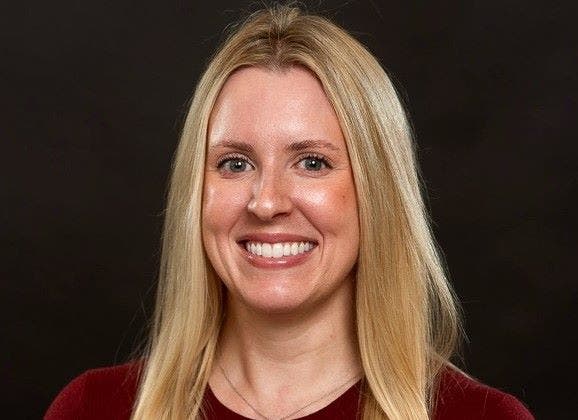
Part of the Tech Women Celebration 50 – a curated list of some of the most inspirational women working at all levels of tech
Clare Schramm Fergus is a senior technology executive with 20 years of experience leading large-scale AI, cloud, and digital transformations. She is currently Managing Director, Banking Technology Platforms at Lloyds Banking Group, where she leads a global team of engineers modernising the bank's core technology platforms. Her remit includes building a next-generation AI platform to enhance business and transaction banking services and API-enabling core systems to drive business outcomes.
Previously, Clare served as Director of AI/ML Systems Engineering at the Ellison Institute of Technology, spearheading a £100M investment in AI infrastructure. She delivered high-performance compute environments, cloud-native MLOps platforms, and large-scale data pipelines to advance AI model development for scientific research aims.
Prior to that, she was Cloud Engineering Director at BT, where she led 600+ engineers building secure hybrid cloud platforms, enterprise AI environments, and energy-efficient infrastructure. Clare has previously held technical leadership roles at Google and IBM.
Clare was named in the IT Leaders 100 in 2025 and has earned multiple cloud certifications. She holds an MSE from the University of Pennsylvania and a BS in Computer Science from Georgetown University.
What do you consider your biggest achievement to date?
Leading the Network Cloud team at BT that won the 2024 Cloud Excellence Award for Most Innovative Cloud Product.
This recognition reflected years of work transforming BT's mobile network infrastructure into a secure, scalable, cloud-native platform that could power next-generation services and unlock new opportunities for the business. The challenge was immense: we needed to modernise legacy systems whilst supporting the critical national infrastructure that powered the UK's 999 service and Emergency Services Network, all without compromising resilience or security.
We designed and delivered a platform capable of hosting complex network functions and delivering them to the edge at scale, all using open-source software. What makes this achievement so meaningful is not just the technology we built, but the culture shift we drove. We embedded engineering excellence, reduced downtime through SRE adoption, and cut energy consumption in our infrastructure.
Winning the award was external validation of what both I and our strategic partner Canonical already knew, that we had created something truly transformative. For me, this achievement symbolises the power of combining bold technical vision with inclusive, high-performing teams to deliver innovation that matters at scale.
What is the most significant challenge you have overcome?
Navigating technology leadership as a neurodiverse professional. Early on, I saw my differences as obstacles and struggled in environments that valued uniformity in communication and working styles. The pressure to mask aspects of myself was exhausting and limiting.
Over time, I realised my neurodiversity was a strength. The same traits that made me feel “different” enabled me to solve complex problems and drive innovation. The key was learning to embrace and communicate my differences so others could understand their value. With the support of a friend, Bill Dusch, through IBM’s neurodiversity group, I gained confidence to speak openly about my experiences and develop complementary communication skills while staying authentic.
As I advanced into leadership, I built teams where diversity is seen as essential for innovation. I lead by example, sharing how I work best and encouraging others to do the same. This approach has helped me deliver large-scale transformation programmes and create environments where people thrive as their authentic selves. Being neurodiverse in spaces not designed for me has taught me to turn perceived limitations into strengths and champion inclusive leadership.
Tell us something about you people would find surprising
Something that often surprises people about me is how much my perspective as a technology leader has been shaped by living and working in multiple countries.
While my career is often defined by the scale of the platforms and teams I’ve led, my leadership approach is equally rooted in navigating diverse cultures. Each country brought different languages, systems, and ways of working. This taught me to adapt quickly, listen deeply, and find common ground in complex environments. These experiences gave me a global view of problem-solving and the confidence to unite diverse teams around shared goals.
This background is now central to my leadership style. I see technology not only as a driver of efficiency but as a bridge connecting people across boundaries. I build environments where varied perspectives are valued, knowing innovation thrives at those intersections. That global outlook continues to guide how I lead and inspire teams to think beyond their immediate context.