IT Essentials: Allen keys and androids
Decorating with distrust
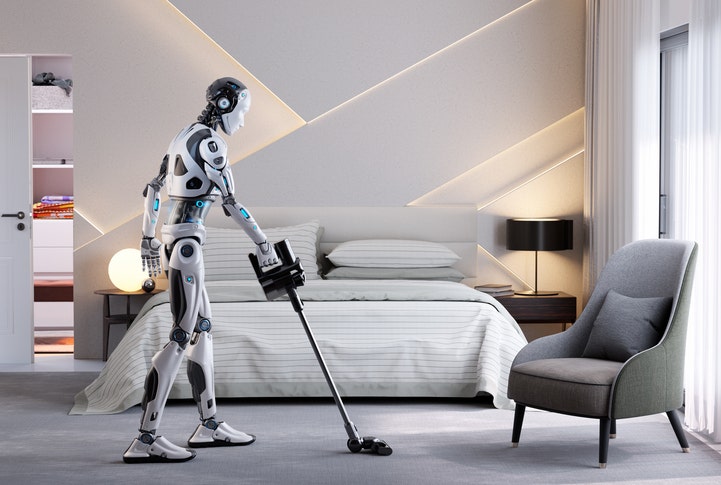
Robots may not be the magic power tool we all thought - if humans have anything to say about it.
The last two weeks at Castle Allen have been dominated by boxes, paint and allen keys (no relation). Yes, we’ve been building the baby’s nursery.
There were times I was ready to throw in the towel, like when I was trying to paint old plaster in fading light at the end of a work day. And when I was lugging a 30kg box (why is furniture for a tiny person so heavy?) up three flights of stairs at the end of a work day. And when I was trying to find a place for the ten tons of detritus we had been storing in that room previously...at the end of a work day.
The point is that, while putting your child’s room together is a deeply personal and magical time, the temptation would have been strong to wave a wand and take out the hard graft if I’d had one. For example, I might have taken advantage of smart glasses to test design schemes and a robot to do the heavy lifting.
According to our research, I’m not alone. About 14% of Computing’s readers either already own or are planning to purchase a pair of smart glasses this year, and a similar number think the rise of the robots is already here – or will be in the next few years.
The question then becomes one of trust. Can I trust the glasses to store my data locally and not upload pictures of my baby’s room to a random server? Can I trust Jeeves Bot to carry boxes safely and not punch through a wall to create a shortcut?
Neither am I alone in thinking that way – we are firmly in the age of AI mistrust, as Penny Horwood writes this week.
For what it’s worth, I don't believe humanoid robots will see mass consumer adoption any time soon, no matter their benefits. The uncanny valley effect is just too strong. As one IT leader told me this week, “We evolved to be the dominant species, and we mean to keep it that way.”
Recommended Reads:
As well as the AI research and feature linked above, we’ve got on-the-ground coverage from the AI Impact Summit in New Delhi thanks to OpenUK’s Amanda Brock. This game-of-two-halves conference began with a focus on inclusivity and access for all, before turning into a billionaires’ playground.
And we’ve gone wider and deeper than ever before with our salary research. While we’ve been tracking UK market movements for many years, we’re now benchmarking IT pay in the USA and Germany, too. This week, I compared these three important countries against each other and found that salaries directly reflect cultural trends – and biases – in each region. It’s a good time to be a British CISO, by the way.
Finally, and on that note, our colleagues at MES Computing have looked at the top five priorities for CISOs in 2026. We’ve rehosted the article here.