IT Essentials: Trump’s own China crisis
Trump’s actions this week may have given China huge future geopolitical advantage
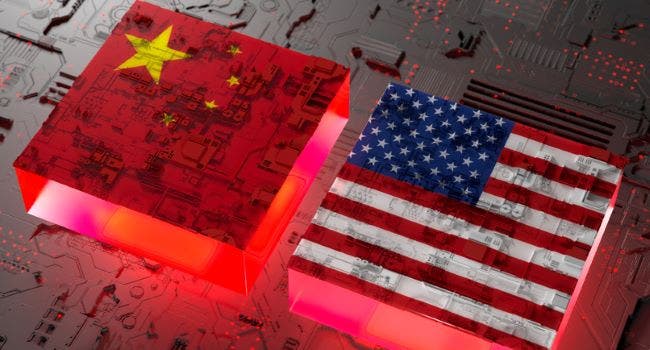
Trump’s reversal on Nvidia chip exports looks odd amid China’s rapid AI progress, and American difficulties.
The AI race is quite literally hotting up as nations with very different ideas of what the world, and the relationships between states and citizens should look like, compete for dominance in AI. Controlling AI will be pivotal in future economic power and national security. AI is no less a strategic resource or rare earth minerals. Or nuclear weapons.
Which makes the move by President Trump last week to reverse the controls on Nvidia H200 chips to China look puzzling.
The White House insists the move balances commercial interests and national security, with the administration taking a 25% cut of sales. Trump also insisted that the most advanced Blackwell and Rubin chip families would remain covered by the export ban.
However, many in Washington were aghast at the move, pointing out that these chips have both civilian and military capability, thus helping China improve its already impressive surveillance and cyber espionage operations. Critics warned that Trump’s latest change of mind (policy has been all over the place this year) amounts to handing China a “colossal economic and national-security gift.”
As Computing has covered throughout the year in our Friday Asia Tech round up, the CCP has been vocal this year about its desire to become self-sufficient in chip production. If Chinese developers (and there’s a lot of them) can reverse engineer the H200, it will eventually leapfrog it, fuelled by subsidies, zero regulation and the encouragement of the CCP.
American pragmatism or bid to keep the bubble afloat?
So, what gives? On the face of it, it looks like Trump has once again been manipulated by Big Tech lobbying – in this case from Jensen Huang. But you could view that as pragmatic. By effectively forcing Chinese companies to use chips such as those by Huawei, it boosts revenues for Chinese chip companies which can be diverted into research. Why not get China hooked on American tech, enjoy the returns and delay the popping of the AI bubble?
The export ban also doesn’t seem to have slowed the pace of Chinese AI innovation. On the contrary, the steady string of open-source LLMs released by Chinese companies this year could suggest that all export bans have done is spur China on and provide an incentive to undermine the proprietary model of US LLMs. Lots of American start-ups are now building on these China-built LLMs because they are cheaper and much more flexible than homegrown alternatives.
By contrast, some American-made AI has fallen short of expectations this year. Despite the hype, GPT-5 was greeted with a loud raspberry. Sam Altman was panicked enough by OpenAI’s lack of progress this year – not against Chinese models but against Google’s Gemini 3 – to issue a “code-red” last week to accelerate improvements in ChatGPT. GPT5.2 is promised in the next few days, but Sam Altman’s promises are about as reliable as train wi-fi.
Chinese models are threatening to stick a pin in the AI bubble because although they have similar limitations, the fact that these models seem to be almost as good (or in some cases better) than others, but have been produced with inferior chips and at a fraction of the cost undermines the whole “more, more, more” approach of Big AI.
Consider too China’s excellence in decade-long planning and contrast that with an American president who is visibly struggling to stay awake in meetings, heads an increasingly kleptocratic administration and has in a short time, via a combination of tariffs and performatively punitive immigration measures created a business climate that is smothering innovation under a blanket of fear.
Throw in the awkward truth that the entire US economy is basically just a gigantic bet on AI, and the winner of the AI race comes into sharp focus.
Viewed through this lens Trump’s decision looks less like a strategic balancing of commerce and national security, and more like the looting of a shopping centre in a horror movie, just before it’s overrun with zombies created inadvertently by human folly.