Microsoft disrupts AI-powered EvilTokens phishing service
Two suspects arrested in the UK
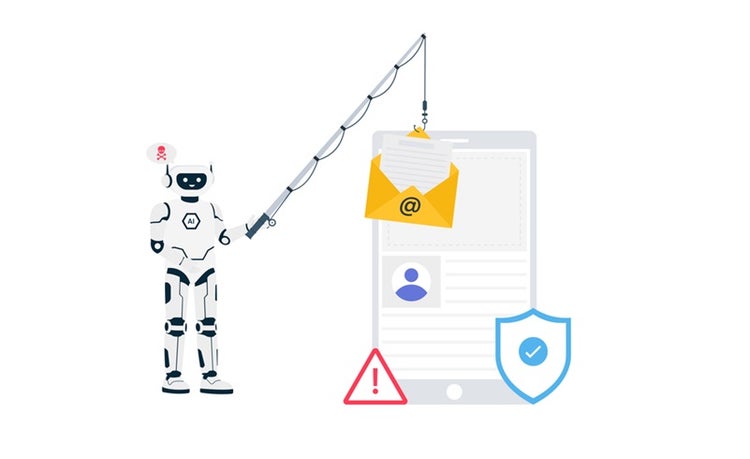
UK police have arrested two men as part of an international operation targeting EvilTokens, a phishing service accused of helping criminals compromise more than 12,000 email accounts at over 10,000 organisations worldwide.
Microsoft said its Digital Crimes Unit (DCU), working with law enforcement and technology companies in the UK and USA, took control of 50 websites used to run the service.
More than 150 additional domains linked to its infrastructure were also disabled.
The Metropolitan Police said two men, aged 32 and 38, were arrested on 18th September on suspicion of administering the EvilTokens website. Both men were released on bail pending further investigation.
Phishing service exploited Microsoft authentication
EvilTokens emerged in February and quickly became a prominent platform for so-called device-code phishing, according to Microsoft.
The technique exploits Microsoft's legitimate OAuth 2.0 device-authorisation process, which is intended for devices with limited input capabilities, including smart TVs, printers and some conferencing equipment.
Attackers generate a device code and send it to a victim in a phishing message. The victim is then directed to Microsoft's genuine login page, where they are persuaded to enter the code and authenticate.
Because the authentication takes place through Microsoft's own service, attackers can obtain authentication tokens without directly stealing the victim's password, potentially bypassing conventional multi-factor authentication protections.
Microsoft tracks the operators behind EvilTokens as Storm-2992. It said campaigns using the service had targeted organisations in sectors including financial services, healthcare, construction, real estate, wholesale distribution and higher education.
The service was advertised through Telegram for $500 a month or $1,500 for lifetime access (which shows just how confident the gang was that it could evade law enforcement over the long term, i.e. not very – Ed.). Customers could also purchase additional tools, including anti-bot systems, bulk email capabilities and Office 365 capture links.
Microsoft said EvilTokens offered 44 customisable phishing kits designed to imitate services ranging from Microsoft and cloud identity platforms to document-signing, invoicing, voicemail and eFax services.
AI used to identify valuable targets
Once an account was compromised, EvilTokens could use Microsoft Graph to map relationships within an organisation and analyse mailbox contents.
The platform could search emails for information such as bank transfers, invoices and executive communications, helping criminals identify accounts and individuals considered valuable targets.
Microsoft said the service could then use AI-powered tools to generate business email compromise messages tailored to the information discovered in the compromised mailboxes.
The platform also used several techniques to make detection more difficult, including HTML attachments, PDFs, multi-stage redirects and fake CAPTCHA pages.
Traffic could be routed through compromised websites and legitimate cloud infrastructure, including Vercel, AWS Lambda and Cloudflare Workers, making the activity harder to distinguish from normal online traffic.
Microsoft said the emergence of EvilTokens reflected a wider rise in device-code phishing.
By April, researchers had identified at least 10 phishing platforms that supported the technique.
The operation followed court authorisations from the US District Court for the Eastern District of Virginia.
Microsoft and Health-ISAC, a non-profit organisation that helps healthcare groups share cyber-threat intelligence, worked with Coinbase, Cloudflare, OpenAI, SpyCloud, Railway, TRM Labs and the Shadowserver Foundation to disrupt the service.
Microsoft said it had also notified affected customers and helped them secure compromised accounts.
The company described the operation as the 40th court-authorised disruption carried out by its Digital Crimes Unit over nearly two decades.
Microsoft recommends that organisations disable device-code authentication where it is not required and restrict the device-code flow where possible.
Users are also advised to check which application they are authenticating to and stop if they are not expecting to sign in to that service.