US Supreme Court ruling casts doubt on EU-US data privacy deal
EU urged to abandon data transfer framework
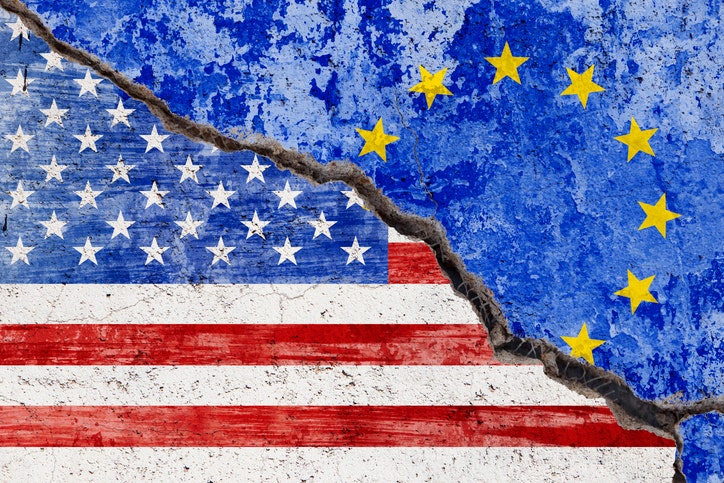
Privacy campaigners are pressuring the EU to begin dismantling its data transfer agreement with the United States, arguing a recent US Supreme Court ruling undermines the pact’s legal foundations.
The calls follows the Supreme Court's decision [pdf] on Monday that gave the US president the authority to remove members of the US Federal Trade Commission (FTC).
In a 6-3 ruling in Trump v. Slaughter, the Supreme Court upheld President Donald Trump's dismissal of FTC Commissioner Rebecca Kelly Slaughter, a decision seen as broadening presidential control over independent federal agencies.
The ruling has fuelled concerns that the FTC agency may no longer qualify as an independent regulator under EU law.
Conflicts with the EU law
In a letter to the European Commission, Austrian privacy activist Max Schrems argues that the judgment effectively invalidates the legal basis for the 2023 EU-US Data Privacy Framework, which governs the transfer of personal data between the two sides of the Atlantic.
Schrems says the ruling conflicts with a core requirement of EU law: that authorities responsible for overseeing data protection operate independently.
The FTC serves as the USA’s principal body responsible for enforcing privacy safeguards under the EU-US Data Privacy Framework.
The European Commission relied on the FTC's independence throughout its adequacy assessment, referencing the agency hundreds of times in the legal decision that approved unrestricted personal data transfers to certified US companies.
"Given that there are no independent authorities in the US anymore, we call on the European Commission to orderly withdraw the adequacy decision on the US," Schrems said.
EU-US data transfers have a storied history
The EU has long restricted the transfer of personal data to countries that do not provide protections considered "essentially equivalent" to those guaranteed under European law.
Since 2000, Brussels has repeatedly approved frameworks allowing companies to move personal data freely between Europe and the United States.
However, those arrangements have faced legal setbacks.
The EU's highest court previously struck down the Safe Harbour agreement in 2015 and the Privacy Shield framework in 2020, citing concerns over US surveillance laws and the lack of effective legal remedies for Europeans.
The current EU-US Data Privacy Framework, adopted in 2023, was introduced as a replacement intended to address those shortcomings.
Schrems and his organisation, Noyb, contend that the Supreme Court's latest ruling has removed another essential pillar supporting the agreement, by calling the FTC's institutional independence into question.
Several EU member states have already embraced a policy of greater digital sovereignty, seeking to reduce their reliance on US technology providers, while some American companies have begun establishing separate data processing operations within the bloc.
Noyb said it plans to file a legal challenge in the coming weeks.
Any judicial review is likely to take several years, meaning businesses on both sides of the Atlantic can continue relying on the existing framework for now.