Hundreds of teenagers to test social media limits in UK government trial
Movement is gathering political steam worldwide
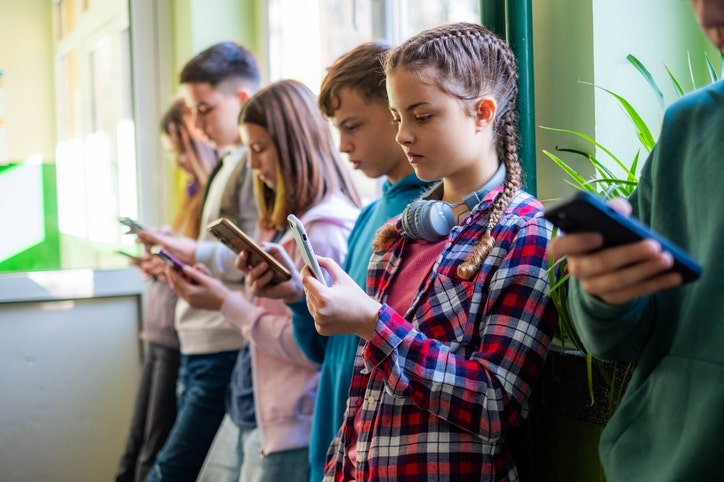
Hundreds of UK teenagers will take part in a government-backed trial exploring the impact of restricting social media access, as ministers consider introducing tougher rules for under-16s.
The six-week pilot, led by the Department for Science, Innovation and Technology (DSIT), will involve 300 participants aged between 13 and 17.
It forms part of a wider consultation into children's use of smartphones, social media and digital platforms.
Participants will be divided into four groups, each subject to different levels of restriction ranging from full parental controls blocking selected apps, to a daily one-hour usage cap on platforms such as TikTok, Snapchat and Instagram.
Another group will face a night-time curfew, with access restricted between 21:00 and 07:00, while a final group will continue with their usual habits for comparison.
Families involved in the trial will be interviewed at both the beginning and end of the study, with researchers examining how the measures affect daily life, wellbeing and any challenges encountered.
The findings are expected to inform future government policy aimed at improving young people's relationship with social media.
Technology Secretary Liz Kendall said the initiative was designed to provide "real-world evidence" to guide decision-making.
"We are determined to give young people the childhood they deserve and to prepare them for the future," she said.
"These pilots will give us the evidence we need to take the next steps."
The trial comes amid growing political pressure to introduce stricter controls.
In January, the House of Lords backed a proposal to ban social media use for under-16s, while dozens of MPs have urged ministers to take stronger action.
Supporters of a ban argue that it could reduce pressure on young people to remain constantly online and limit exposure to harmful content.
However, critics warn that such measures may be difficult to enforce and could push children towards less regulated parts of the internet.
Alongside the pilot, a separate large-scale scientific study will examine the effects of reduced social media use on adolescents.
The research, funded by the Wellcome Trust, will involve around 4,000 pupils aged 12 to 15 from schools in Bradford.
The study will analyse factors including anxiety, sleep quality, social interactions, school attendance and experiences of bullying.
Children's charities remain divided.
Suicide prevention charity The Molly Rose Foundation welcomed the government's review, calling it an opportunity to strengthen online safety laws.
Other organisations, including the NSPCC and the 5Rights Foundation, have said a blanket ban could create a "false sense of security".
The UK is not alone in considering tighter restrictions. Australia introduced a nationwide ban on under-16s holding social media accounts in December 2025, prompting global debate.
Several European countries, as well as Malaysia, are exploring similar measures.
The UK consultation, which closes on 26th May, has already received nearly 30,000 responses from parents and young people.
It is also seeking views on whether platforms should be required to disable features such as infinite scrolling and autoplay, which are often criticised as addictive.
Ministers say the results of the pilot and consultation will shape the next steps in regulating children's online activity.