AI minister leaves door open to regulation of advanced AI models
Kanishka Narayan’s remarks reopen debate over UK's light-touch AI governance approach
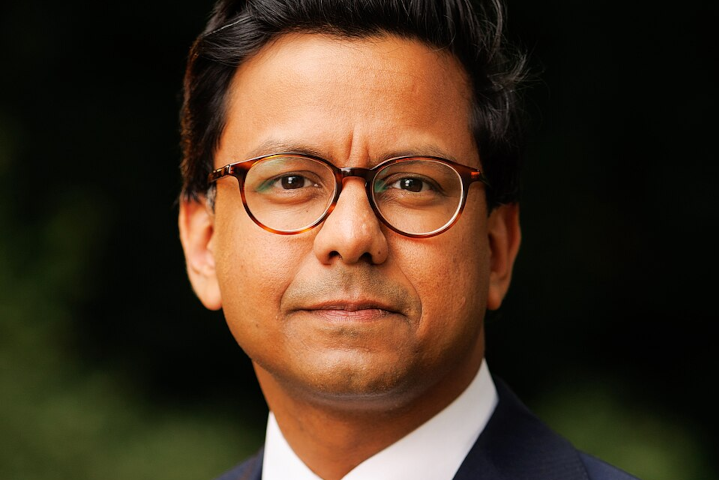
AI minister Kanishka Narayan has said that the UK would consider regulating advanced AI models if the current system of voluntary agreements with vendors proves inadequate.
Speaking to Reuters, Narayan said: "If the right mechanism and lever changes in time and it feels like regulation might be a way that helps us do that, of course, we will look at it."
His remarks appear to reopen the debate over whether the UK's mostly voluntary approach to AI governance can keep pace with rapidly advancing frontier models.
Since hosting the 2023 AI Safety Summit at Bletchley Park, successive UK governments have favoured “innovation-friendly” voluntary agreements over regulation, with the aim of making the country an attractive destination for investment.
This approach is in deliberate contrast with Europe’s regulatory regime, embodied in the EU AI Act.
However, MPs, peers, regulators and industry groups have warned repeatedly that self-regulation may prove insufficient as AI systems become more powerful.
Recent disclosures by OpenAI and Anthropic concerning advanced cyber capabilities have intensified those concerns. The AI Security Institute (AISI) – which was renamed from the AI Safety Institute in line with the Starmer government’s pro-innovation push – is under renewed scrutiny as to whether voluntary safeguards can continue to keep pace with frontier model development.
Currently, under voluntary agreements with OpenAI, Anthropic, Google and others, the AISI receives access to advanced models for evaluation before public release. It reports its findings to the government and the developers. Its ability to stress test the models, discover any dangerous capabilities and attempt to break guardrails depends to a great extent on continued access to, and cooperation from, the vendors.
Proponents argue that this approach gives the UK unique insight into the progress being made by frontier AI labs. But as such models proliferate, particularly with the emergence of powerful open source and Chinese models, it may become harder to sustain.
Narayan, who was appointed to the new Cabinet post of Minister for AI by Andy Burnham in July, told Reuters he was focused on outcomes rather than "obsessing only with the mechanism".
The UK AI Bill, which Labour had been expected to introduce soon after taking power, has been delayed repeatedly and its status remains unclear.