Microsoft pledges to shield households from AI datacentre costs
The company says it will offset its water use by replenishing more than its US datacentres consume
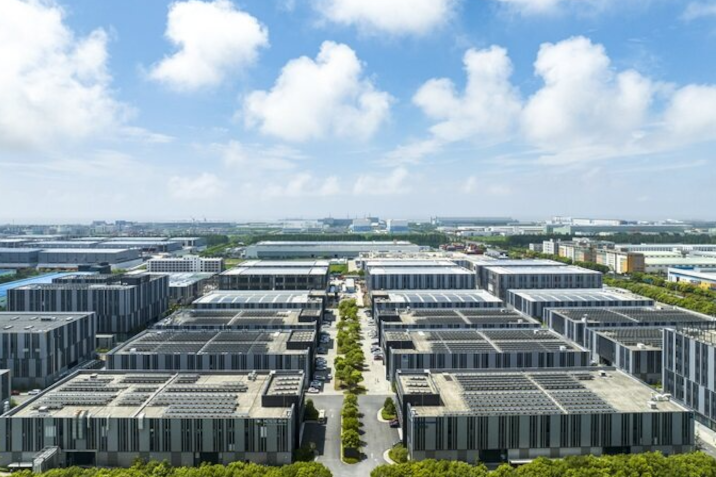
Microsoft has announced a new initiative aimed at limiting the impact of its rapidly expanding datacentre network on electricity prices and water supplies in the United States.
The technology giant said it would ensure households are not left subsidising the power-hungry facilities that underpin AI services, promising to pay utility rates that fully reflect the cost of electricity generation, grid upgrades and new infrastructure needed to serve its sites. It also said it would no longer accept subsidies from US states.
The move comes amid mounting political pressure to expand datacentre capacity to keep the US competitive in AI, while local communities are voicing concern over rising power bills, noise, pollution, water abstraction and limited job creation.
Microsoft said it would work more closely with utilities, sharing long-term projections of electricity demand and contracting power in advance. Where new transmission lines or substations are required, the company said it would fund the upgrades itself.
"Especially when tech companies are so profitable, it's both unfair and politically unrealistic for our industry to ask the public to shoulder added electricity costs for AI," said Microsoft vice chair and president Brad Smith.
The company has also pledged to replenish more water than its US datacentres consume and said it would begin publishing detailed water-use data for each region, alongside progress on replenishment efforts.
AI datacentres already consume vast amounts of electricity, with demand expected to rise sharply.
The International Energy Agency estimates that electricity use by US datacentres could more than triple by 2035.
Ahead of the announcement, President Donald Trump said Microsoft would make "major changes" to its AI infrastructure plans to help curb power costs for Americans, as the administration faces growing cost-of-living concerns ahead of this year's midterm elections.
Microsoft has previously faced local opposition to datacentre projects, including in Wisconsin, where it withdrew plans for a new facility. The company said it is now supporting a special electricity rate structure in the state designed to prevent costs being passed on to residential customers.
Smith, who is from Wisconsin, promised that Microsoft will be more transparent over its land deals, with fewer nondisclosure agreements, and that it would work with state authorities and local businesses on apprenticeship schemes.
Coal power falls in China and India for first time in decades
The debate over datacentre energy use is unfolding against a shifting global power landscape.
In a development described by analysts as historic, coal-fired electricity generation fell in both China and India last year for the first time in more than five decades, according to new analysis.
Coal generation declined by 1.6% in China and 3% in India in 2025, even as electricity demand continued to rise.
The analysis, carried out by the Centre for Research on Energy and Clean Air and commissioned by climate news website Carbon Brief, attributed the decline largely to record growth in clean energy.
China and India combined account for more than half of coal-fired power produced worldwide.
China added 300 gigawatts of solar capacity and 100 gigawatts of wind power last year, while solar, wind and nuclear generation combined rose enough to exceed demand growth.
In India, renewable capacity additions surged by more than 40%, reducing the need for coal plants to run at high levels.
However, researchers cautioned that the shift may not be permanent. Both countries continue to approve and build new coal-fired power stations, driven by concerns over energy security and peak demand during extreme heat.
Researchers said that if clean energy continues to meet demand growth, coal power could peak permanently in China and before 2030 in India. But they cautioned that extreme heat remains a key uncertainty, as coal plants are often relied on to meet evening demand when solar output falls.