ASML wobbles as Chinese chipmaking advances - Asian Tech Roundup
Plus: Melbourne’s mega-datacentre plans
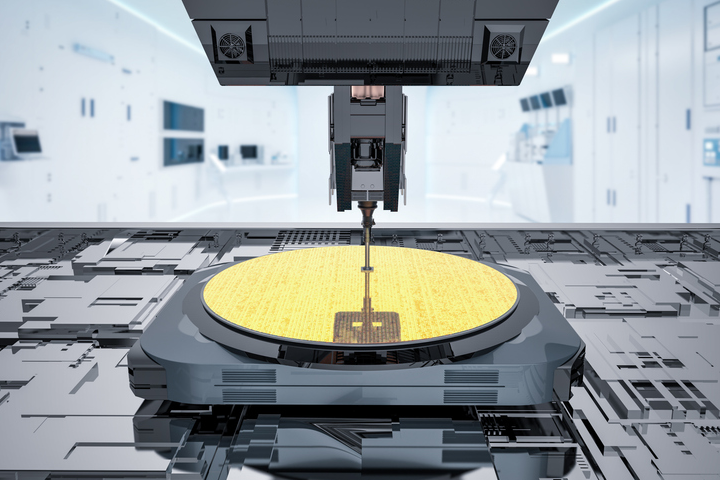
Welcome to Computing's weekly roundup of tech news in Asia. This time we look at market jitters on reports of chipmaking advances in China, Melbourne’s planned mega-datacentre and massive profits at SK Hynix and Samsung.
News that the state-backed Shanghai Aishengna Electronic Technology Group has begun mass producing of domestically developed immersion Deep Ultraviolet (DUV) lithography machines sparked fresh market jitters this week.
The reports were enough to send the share price of ASML - the Netherlands-based producer of DUV and advanced EUV (Extreme Ultraviolet) lithography machines used to manufacture the world’s most advanced chips – plunging by 8% on 27th July.
Why? Well ASML, best known as the world's only commercial supplier of EUV machines, is also a major provider of less advanced but still extremely capable DUV systems, and as such enjoys a near-monopoly at the cutting edge of lithography.
It retains this position thanks to an advanced supply chain built up over decades and highly specialised components such as Zeiss ultra-precision optical systems and unique laser-plasma light sources. Its expertise, IP and partnerships have provided a moat, wide and deep, that competitors have so far struggled to cross.
ASML's EUV devices can expose silicon wafers with ultra-fine precision at industrial scale. They are right at the cutting edge and are used by TSMC, Samsung and Intel for chips of 5nm and below. Export to China is banned, and the country is thought to be years away from being able to create its own viable EUV machines.
Compared with EUV, DUV is a less precise technology. It uses longer wavelength light, requires more steps, and is unable to easily produce the very small components that are a feature of the most advanced chips. However, a variant called immersion DUV, which is the tech reportedly refined by Shanghai Aishengna Electronic Technology Group, may be closing the gap, especially in combination with other techniques.
Currently China is ASML’s largest market for DUV devices – although, as with EUV, its most advanced immersion DUV machines are also restricted. If China were to catch up, that could inflict a significant dent in the company’s sales.
The capability of the new Chinese immersion DUV devices is uncertain at this point, and it may take months or years to reach the standard of AMSL’s devices. But mere reports of their commercial production have made investors jittery, worried that they might be good enough to produce advanced AI chips, albeit at longer production times and higher costs.
Importantly, they are likely to improve rapidly; China is dedicating substantial resources and engineering know-how to its goal of self-sufficiency in this area.
Chinese firms appear to be bridging ASML’s much-vaunted moat sooner than most analysts had thought possible, and investors fear what that could mean for the Dutch company’s future sales, as well as for the wider market for advanced chips.
Australia
- Plans are underway for a mega datacentre outside Melbourne, spanning 350 hectares and set to be nearly six times the size of Chadstone Shopping Centre. The facility will require its own gas turbines and is the largest data centre ever publicly proposed in Australia. Source
- Elon Musk has criticised Australia's under-16 social media crackdown, claiming it violates international law. Source
- Australia is tightening AI regulations, introducing mandatory standards and establishing an Office of AI, as enterprises deploy agentic AI tools like 1Password for Claude that allow AI agents to log in to websites without exposing credentials. Source
- New regulations for data centres in Australia are creating hurdles for operators, with industry representatives warning that compliance costs and uncertainty could slow expansion plans. Source
- Atlassian is shifting from encouraging high AI usage ('tokenmaxxing') to capping employee access and spending to control soaring costs. Source
China
- Chinese manufacturers have started mass production of domestic immersion DUV lithography machines, marking a significant step in the country’s semiconductor self-sufficiency. Source

- ASML shares dropped after reports that a Chinese company is preparing to manufacture deep ultraviolet (DUV) chipmaking machines, potentially challenging ASML’s dominance. Source
- Chinese tech firms, including AI startup Moonshot, are struggling to secure advanced Nvidia chips. Source
- The US government has banned imports of new Chinese robots, following lobbying by American robot makers to counter the spread of popular Chinese bots. Source
- Moonshot has released its breakthrough Kimi K3 LLM for public download. Source
-
- Chipmaker CXMT surged 466% in its Shanghai debut, raising $8.6 billion and becoming China's most valuable listed company. The company plans to use the IPO proceeds to mass-produce memory wafers, positioning itself as a key player in China's push for semiconductor self-sufficiency. Source
- Profits in China's chipmaking sector surged by 2,500% in the first half of 2026, driven by the rapid expansion of AI applications and increased demand for domestic semiconductors. Source
- Leaked comments reveal DeepSeek founder Liang Wenfeng’s philosophy, his pursuit of long-term AI goals rather than short-term profits, and positioning DeepSeek as a key player. Source
- Huawei is reportedly partnering with SwaySure and the Chinese government to build a 12-inch DRAM fabrication plant in Shenzhen, aiming for a production target of 140,000 wafers per month. Source
- Trip.com has been fined $765 million by China’s market regulator for abusing its dominant position in online hotel bookings, forcing hotels into exclusive deals and controlling their prices. Source
- China has raised its renewable energy consumption target by 53% for 2030, aiming for 1.8 billion tons of coal equivalent, with wind and solar expected to provide 20% of peak electricity. The plan includes expanding solar thermal and marine energy capacity, and continued nuclear buildout. Source
- China has released a draft law targeting cyberbullying, including provisions to address abuse enabled by artificial intelligence. Source
- Zhongji Innolight, China’s largest optical interconnect supplier, debuted on the Hong Kong Stock Exchange after a $6.8 billion IPO. Shares fell 5% on opening, with proceeds earmarked for R&D, overseas expansion, and supply chain strengthening. Source
- Chinese high school graduates are increasingly using AI bots to help them choose colleges and subjects. Source
- US Republican Senator Tom Cotton has urged the Trump administration to ban Chinese AI models for government contractors. Source
India
- Tata Motors and Mahindra have topped a global battery efficiency ranking, outpacing Tesla and BYD, highlighting India's expertise in building energy-efficient EVs. Source
- IT and software job opportunities in India are declining, while demand for therapists is rising, according to a recent study. Source
- The Supreme Court of India has released a white paper outlining the use of AI in the judiciary, emphasising human oversight and cautioning against risks such as fabricated citations, algorithmic bias, and privacy breaches. Source
- A Delhi High Court case has drawn attention to the misuse of Meta's automated copyright takedown system, with bad actors allegedly exploiting backdated Facebook posts to remove original content. Source
- The Indian government has ordered GitHub to restrict access to repositories for Jack Dorsey’s offline messaging app Bitchat, citing concerns that its decentralised architecture could facilitate unlawful activity during internet shutdowns. The move has sparked legal debate about the basis for targeting open source software and comes amid student protests and increased internet restrictions in New Delhi. Source
- Infosys has appointed Ashiss Kumar Dash as CEO designate, to start April 2027. Dash, a three-decade Infosys veteran, will succeed Salil Parekh. Source
Japan
- Chinese cybercrime group SilverFox has targeted a Japanese industrial manufacturer with a sophisticated attack chain, using vulnerable drivers and DLL sideloading to deploy
- ValleyRAT for persistent remote access. Source
- Despite a government push, Japanese citizens and businesses remain sceptical of AI with adoption lagging other countries. Source
Singapore
- Singapore’s Monetary Authority has raised concerns that a global pullback in AI investment could destabilise financial markets. Source
- Despite mandatory SIM identity checks since 2005, Singaporeans lost S$913.1 million to scams in 2025, demonstrating that verification alone cannot prevent telecoms fraud. Source
South Korea
- South Korean regulators have fined telecoms giant KT Corporation won 53.979 billion ($39 million) over data protection violations in 2025, when an internal network was compromised. Source
- SK Hynix reported a 557% jump in second quarter profit, driven by strong demand for AI chips, though results fell short of market forecasts. Source
- And Samsung's operating profit surged by 1,800% in the second quarter. Source
- SK Hynix reports that major tech companies are seeking deals to stabilise memory prices amid ongoing volatility in the market. Source
- South Korea’s leading chipmakers have secured $700 billion in AI-related deals. Source
- Samsung Electronics and Broadcom have signed a memorandum of understanding for a $200 billion collaboration over five years, focusing on next-generation memory solutions and 2-nanometre process technologies for AI and networking chips. Source
- President Lee Jae Myung hosted an AI summit in San Francisco, unveiling the “San Francisco AI Declaration” and announcing $950 billion in new AI initiatives involving Samsung Electronics, SK Group, and US tech firms. The deals include a $500 billion partnership between SK Hynix and Nvidia for next-generation memory and a planned 2-gigawatt data centre, positioning South Korea as a global AI powerhouse. Source
Taiwan
- Taiwanese authorities have detained an Nvidia employee as part of a probe into Super Micro, with local media reporting the investigation focuses on alleged business misconduct. Source
- A court has rejected an appeal against a 10-year sentence handed down to former TSMC employee Chen Li-ming for industrial espionage. Source
Elsewhere in Asia
- Asia: IBM is advancing its quantum computing initiatives across Asia, aiming to accelerate adoption and partnerships in the region. Source
- North Korea: A series of attacks on open-source JavaScript libraries have been traced to a financially motivated North Korean nation-state threat actor, according to an analysis by AWS. Source