UK launches world's largest AI breast cancer screening trial
Nearly 700,000 women will take part in the £10m NHS study
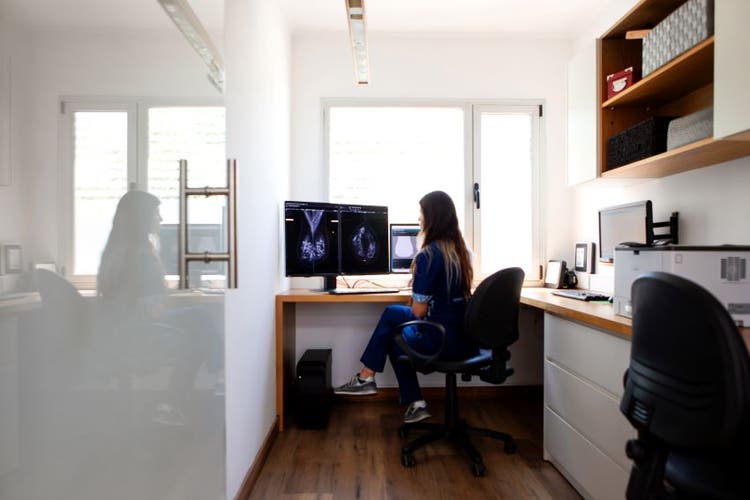
Nearly 700,000 women will be invited to join the world’s largest AI breast cancer screening trial, testing whether the technology can improve early detection and reduce radiologists’ workloads.
Nearly 700,000 women across the UK will be invited to take part in the world's largest trial examining whether AI can help detect breast cancer earlier.
The £10m study, known as the EDITH trial, will investigate whether AI-assisted technology can identify signs of cancer in breast screening images while reducing the workload of specialist radiologists.
Under the current NHS screening programme, two specialists independently examine each mammogram, an X-ray image of the breast, to look for signs of cancer.
The trial will test whether AI can replace one of those two human reviewers, with a specialist radiologist continuing to assess the images.
Researchers hope the technology will help identify cancers that are too small to be detected through physical examination, while also allowing radiologists to devote more time to patients who need further investigation and treatment.
Recruitment has already started at Cambridge University Hospitals, making it the first of the 30 sites involved in the study.
AI to analyse mammograms
Women aged between 50 and 71 are routinely invited for breast screening every three years in the UK, with more than two million attending appointments annually. Women will be informed about the EDITH study when they receive their screening invitations, but participation will be voluntary.
The trial will not change the screening appointment itself. Instead, researchers will examine how AI can be incorporated into the process of reviewing mammograms.
In one part of the study, AI software will assess and grade images before they are examined by NHS specialists. In another, the technology will analyse the images after the human reviewers have completed their assessments.
Machine-learning systems can analyse large datasets of previous mammograms to learn to recognise patterns and subtle changes in breast tissue that might otherwise be overlooked.
Several studies have already suggested that AI could improve breast cancer detection rates, but the EDITH trial will provide a much larger assessment of its effectiveness in routine NHS screening.
AI trial targets earlier breast cancer detection
Breast cancer is the most frequently diagnosed cancer among women in the UK, accounting for approximately 59,000 new cases annually. Around a third are detected through routine mammograms, often at an early stage when treatment is more likely to be successful.
Professor Fiona Gilbert, from the University of Cambridge and an honorary consultant at Addenbrooke's Hospital, said AI could make the process of reviewing mammograms more efficient.
The launch of the trial was marked by a visit to Addenbrooke's Hospital by Health and Social Care Secretary Yvette Cooper, who met its leaders, including Professor Gilbert and Professor Sian Taylor-Phillips of the University of Warwick.
Cooper said the study represented a major investment in using technology to improve cancer diagnosis.
NHS builds platform for AI-assisted screening
Four AI companies are participating in the research, which is expected to run for approximately three years. It will also be supported by the AI Research Screening Platform (AIR-SP), developed by NHS England with nearly £6m in government funding.
The platform is designed to make it easier for NHS trusts to participate in research into AI-assisted screening.
UK Minister for Artificial Intelligence Kanishka Narayan said the trial would test whether AI could work alongside radiologists to improve detection.
"Finding cancer earlier can make all the difference to patients and their families, including saving lives," he added.