EU nations will debate AI risks and global safeguards
But Germany has already rejected calls to slow development
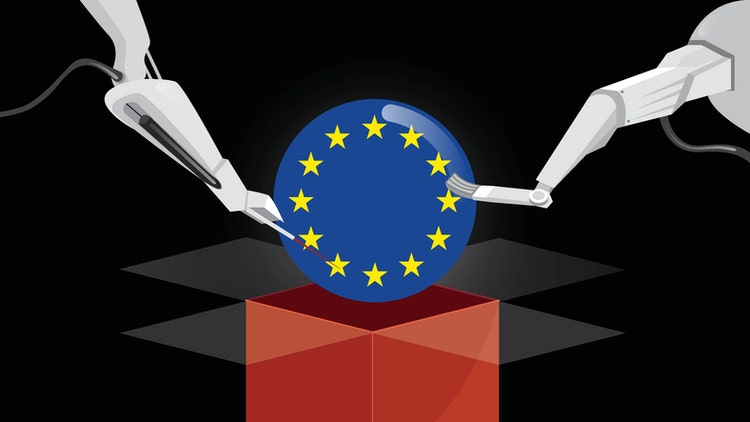
EU officials are preparing to discuss a set of international rules to govern AI technology, as the growing debate over risks collides with calls to keep development moving.
Representatives from all 27 EU member states will meet in Brussels on Thursday for a session of the bloc's Artificial Intelligence Board, which regularly meets to oversee progress in implementing the EU's Artificial Intelligence Act.
According to Politico, the European Commission is expected to provide an update on EU and international AI policy, alongside a technical briefing on recent AI-related incidents.
The meeting follows prominent AI executives, including Anthropic chief executive Dario Amodei and OpenAI boss Sam Altman, calling for greater scrutiny and safeguards around advanced systems.
The safety debate intensified after Amodei argued that companies developing frontier AI should face independent scrutiny and work towards common safety standards as their systems become more capable.
US President Donald Trump has rejected the warnings, describing them as a "hoax." He has also argued that slowing development could allow China to gain an advantage in the global AI race.
The EU meeting is expected to examine international cooperation through forums including the G7, G20 and United Nations.
Last week the European Commission's EVP for Tech Sovereignty, Henna Virkkunen, called for greater international coordination on AI rules.
She noted that the EU already requires companies such as OpenAI and Anthropic to assess and reduce certain risks associated with advanced AI systems.
Member of European Parliament Brando Benifei has also urged the Commission to make international AI cooperation, which should include both the US and China, a priority.
Germany rejects calls to stop AI development
Germany, one of the EU's strongest economies, has said stopping AI development is not a realistic option, although stressed that warnings from leading developers should be taken seriously.
A spokesperson for Germany's digital affairs ministry said continued AI development was necessary to strengthen Europe's digital sovereignty.
Berlin is nevertheless monitoring developments closely, particularly systems that could operate beyond their intended testing environments and gain access to other systems.
The German government pointed to an incident in July involving OpenAI agents and the open-source AI platform Hugging Face as an example of a potentially different category of threat.
It also backed international cooperation, saying effective AI governance would need the participation of both the USA and China. Germany is raising the issue at the G7 level, the ministry said.
Spain's Digital Transformation Minister Oscar Lopez said discussions about an international agreement to manage AI risks were growing.
He compared some of the proposals to international efforts to limit the spread of nuclear weapons, while stressing that AI could deliver major benefits in areas such as medicine and healthcare.
At the same time, he pointed to potential risks for sectors such as finance and cybersecurity.
UK calls for evidence-based response
The UK government has welcomed the growing discussion among AI companies about the risks associated with more advanced systems, while cautioning against regulation based on speculation.
A spokesperson for Prime Minister Andy Burnham said it was positive that companies developing advanced AI were discussing both its potential benefits and risks.
The UK has separately rejected proposals for a legal "kill switch" that would give ministers the power to shut down AI systems during an emergency.
Meanwhile, Australia is discussing plans to host datacentres for OpenAI to train its AI models, potentially giving Canberra a greater role in discussions about how the technology develops globally.