Australia retreats on AI renewables plan - Asian Tech Roundup
Plus: Is China’s robot bubble bursting?
Welcome to Computing's weekly roundup of tech news in Asia. This time we look at Australian PM Albanese’s reversal in the face of state energy interests, record-breaking robots and stock market plunges, and New Zealand and Pakistan both proposing under-16 social media bans.
Australia's plans to combine the construction of AI datacentres while simultaneously promoting the development of renewable energy appear to be in jeopardy after prime minister Albanese backed down on a key element of the plan, following resistance from state governments.
Canberra had originally proposed a system called "causer pays" in which data centre providers would fund the construction of solar or wind generation facilities rather than drawing power from the main grid. This would be a way of meeting both the country's AI ambitions and its environmental goals, and preventing power-hungry datacentres from hoovering up the available grid capacity and energy bills increasing for consumers - as has occurred in some US states. The plan sought to standardise requirements for water usage and planning.
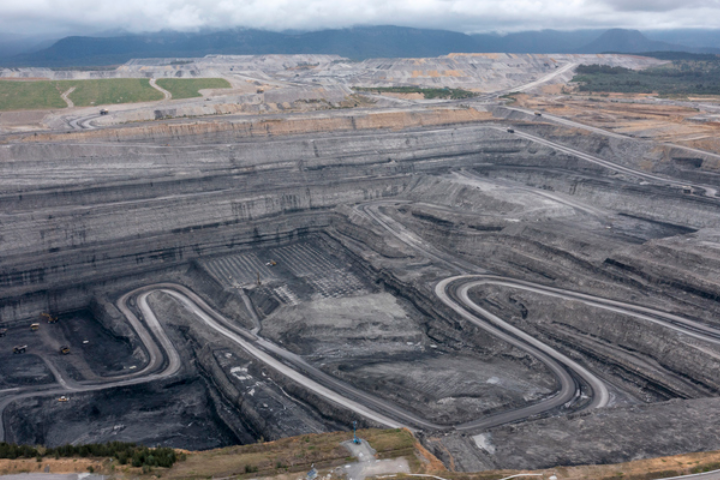
However, Queensland, Australia's largest coal producer, and Northern Territories, which is expanding operations on a gas field, objected to the renewables element of the plan. They argued that central government shouldn't be able to control states' energy choices and that they should be able to make their own choices.
Energy minister Chris Bowen had previously said the government was prepared to legislate national standards even without unanimous state support, raising the prospect of a constitutional dispute, but on Wednesday, following a National Cabinet meeting, Albenese backed down. The two states will now be able to decide the energy sources that datacentre developers can choose. However, on Friday Bowen insisted central government will have the final say.
Assuming the carve-out persists, it won't mean that every datacentre builder will necessarily choose coal or gas. Australia has abundant sunshine and land resources, after all, and companies have their own targets to meet, but the revision means no longer guarantees that new AI infrastructure will be matched by new renewables. It is also not clear at this stage that developers will be required to fund additional generation and grid connections on the same terms as originally proposed, or whether the scheme has been fatally weakened.
The wider challenge remains unchanged. Australia has a pipeline of 200 datacentre projects in development and power consumption by the sector is projected to increase multi-fold over the coming years - up seven times by 2035-2036. The original argument of the federal government - that this was a rare opportunity to shape the AI build-out before hundreds of billions of dollars were committed - seems the have been sacrificed on the altar of state politics.
Australia
- Prime minister Albanese announced an Office of AI and proposed new standards for data centres, including requirements to put more electricity into the grid than they take out, minimise water use, and uphold strong copyright protections for Australian creative works. Source
- But he later backed down following pressure from state governments, allowing Australian states to use their own energy policies for powering AI datacentres. Source
- Australia is expected to see a surge in datacentre construction as AI companies accelerate projects to avoid impending regulatory changes. Source

- Australian data centres are projected to consume 13% of the national electricity market by 2035-36, a nearly sevenfold increase from today. Source
- Australian authorities have arrested and charged two men believed to be members of TeamPCP, a cybercrime group responsible for a series of supply chain attacks that compromised open-source security tools and affected thousands of organisations globally. Source
- An Australian court ruled that dating site eHarmony misled users about the true cost of its subscriptions, finding its terms were unclear and deceptive. Source
- Wholly AI-generated music is now banned from the official Australian charts after concerns were raised by artists about the authenticity of music rankings. Source
- WiseTech saw its shares drop 10% after reporting annual profits below expectations. Source
China
- Robot maker Unitree's share price dropped sharply after its IPO, raising concerns about speculative bubbles in China's robotics sector. Source
- Xiaomi has launched its new 3nm XRING O3 chip, claiming a record-breaking score on AnTuTu and positioning itself as a challenger to Qualcomm and MediaTek in the flagship mobile processor market. Source
- Huawei is testing its AI Ascend chips in Egypt, challenging US tech dominance of Nvidia, AMD, and Microsoft in the region. Source
- Moonshot is in discussions with Microsoft, Amazon, and Google regarding revenue sharing for its Kimi K3 AI platform, which could reshape partnerships in China's cloud and retail sectors. Source
- Huawei and HP have signed a multi-year Wi-Fi patent agreement. Source
- Goldman Sachs projects that China's advanced chip deficit will shrink from 92% to 34% by 2035, despite ongoing equipment bottlenecks. Source
- ChangXin Memory Technologies (CXMT) reportedly used leaked Samsung manufacturing blueprints to accelerate its rise as China's largest DRAM producer, with South Korean courts convicting former Samsung engineers for their role in the technology transfer. Source
- Honor's humanoid robot "Lightning" ran 100 metres in less than 9 seconds during a test event, surpassing Usain Bolt's human world record. Source
- Alibaba Group is raising $10.2 billion through a share sale to invest in full-stack AI capabilities, including infrastructure expansion, as it faces rising costs and intensifies competition in the global AI market. Source
- US authorities say they have disrupted two hacking platforms, QScan and QTRouter, operated by the Chinese state-linked group QTFY, which targeted critical US infrastructure including NASA, the Federal Reserve, and the US Senate. Source
India
- India's crewed space programme is set to launch this year after missing previous targets, with ISRO now aiming to establish a space station by 2035. Source
- Infineon Technologies is acquiring Bangalore-based C2i Semiconductors to enhance its power management portfolio for AI data centres, adding expertise in software-defined power technologies and expanding its R&D footprint in India. Source
- The Rajasthan High Court is examining the impact of AI on children, focusing on privacy, surveillance, and online harms, and considering regulatory responses. Source
- India's datacentre sector is expanding rapidly driven by hyperscaler investments, AI workloads, and data localisation requirements, with capacity projected to exceed 6.7 GW by 2030 and over $300 billion in investment commitments. Source
- Andhra Pradesh has approved four data centre projects totalling Rs2.83 lakh crore ($34 billion), with two facilities dedicated to AI, including a giga-scale centre by Reliance Industries and a 512 MW “green” AI centre by AM AI Factory. Source
Japan
- Japan plans to fund rare earth mining projects, offering long-term technology support and potentially hundreds of billions of yen in assistance for deep-sea extraction. Source
- The Japanese government and central bank will launch a trial for real-time stock and bond settlements using blockchain technology. Source
- Google, OpenAI, Meta, and TikTok are partnering with Japan in a public-private initiative to combat scams, with a focus on fraud linked to Cambodia, Myanmar and other centres of organised crime. Source
- Japan is proposing new regulations requiring AI companies to disclose the specific datasets used for training their models. Source
- Japan has entered the neutral atom quantum computing race with Shunkai, its first full-stack quantum computer. Source
South Korea
- The Korea Communications Commission has urged Meta to apply the new child protection measures it agreed to after settling a US court case globally, to ensure consistent safety standards. Source
- Samsung Electronics announced shareholder returns totalling $65.1 billion to $79.52 billion for 2026, the largest ever by a Korean company, following SK Hynix's $30.1 billion buyback, as both firms benefit from surging AI chip demand. Source
- Union members at SK Hynix have rejected a proposed wage agreement, raising the possibility of further industrial action at the major chipmaker. Source
- South Korea is proposing a Future Response Fund, estimated at over $72 billion, to support youth employment, housing, and AI investment, using excess tax revenue to address rising youth unemployment and foster growth sectors. Source
- A breach at a government-backed startup platform exposed encrypted personal data after an encryption key was mishandled. Source
Elsewhere in Asia
- New Zealand: The government has introduced a bill to ban under-16s from social media, requiring platforms to verify users’ ages and imposing penalties of up to 10% of global revenue for non-compliance. But the bill faces political opposition and is unlikely to pass before the November election. Source
- Pakistan: A petition before Islamabad High Court seeks a nationwide ban on social media accounts for children under 16, citing concerns over online safety and child protection. Source
- Singapore: Singapore’s National University has deployed a prototype 20-unit biological computing rack using living human neurons, marking the world’s first independently operated biologically integrated server rack. Source
- Taiwan: Taiwanese prosecutors have indicted nine people, including employees of Nvidia and Super Micro, for allegedly exporting AI servers to China in violation of US export controls. Source