AI is closing the door on entry-level jobs, study finds
Automation presents the greatest threat to jobs
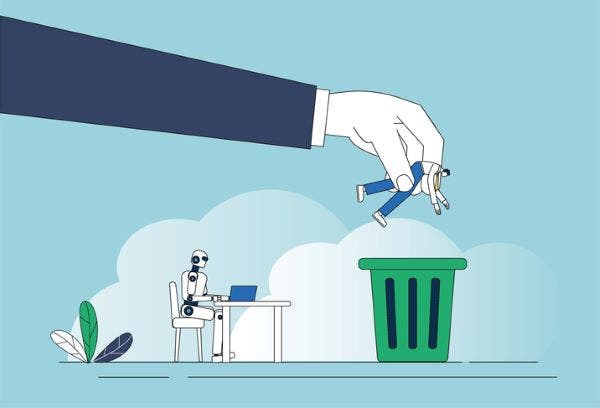
A new study by economists at Stanford University suggests AI is increasingly affecting the job prospects of younger workers, with entry-level positions in AI-exposed occupations facing the sharpest decline.
Employment among workers aged 22 to 25 in the occupations most affected by AI is now 19% lower than in fields considered less exposed, according to the latest findings.
The gap has widened from 13% a year earlier.
The research, published in the August 2026 update of Canaries in the Coal Mine? Six Facts about the Recent Employment Effects of Artificial Intelligence, draws on anonymised US payroll data compiled by HR management company ADP.
The researchers compared occupations according to their potential exposure to AI, using measures developed by previous researchers alongside data from the Anthropic Economic Index, which tracks how the Claude AI model is used across different types of work.
Across the workforce as a whole, the study found little difference in employment between occupations considered highly exposed to AI and those less affected.
But the picture changes significantly among younger workers.
Since 2022, employment for people aged 22 to 25 in the 40% of occupations most affected by AI has fallen by about 11%.
Over the same period, employment for young workers in the 60% of occupations least affected by AI increased by 10%.
The researchers said the difference appeared to be driven primarily by weaker hiring rather than by increased redundancies or workers leaving their jobs. They also found that the impact was more apparent in employment levels than in wages.
Automation poses the biggest risk
The study distinguishes between AI that replaces human work and AI that helps people perform their jobs more effectively.
Occupations such as accountants, auditors, receptionists and information clerks were among those considered particularly vulnerable to automation.
By contrast, roles such as chief executives and registered nurses were more likely to use AI as a tool to support human work rather than replace it.
The researchers found that occupations where AI was more commonly used for automation had the weakest employment outcomes for entry-level workers. The findings, they said, were consistent with AI replacing some forms of labour while supporting employment in jobs where human expertise remains important.
Education may offer some protection
The researchers also examined whether the type of knowledge required for a job could influence its vulnerability to AI.
They divided occupations according to their reliance on "codified" knowledge – formal information that can be taught through education, textbooks and written procedures – and "tacit" knowledge, which is generally developed through experience, mentoring and repeated exposure to real-world situations.
The study found that occupations relying more heavily on codified knowledge tended to have slower employment growth among entry-level workers.
Jobs requiring greater amounts of tacit knowledge, meanwhile, showed stronger employment growth among mid-career and senior workers.
Higher education may also provide some protection against the effects of AI, according to the research.
Last month, research by ISC2 suggested notable changes in early-career positions in cybersecurity.
Fifty-six percent of the survey respondents said AI had somewhat or significantly reduced the need for entry-level cybersecurity roles over the previous year.