Smartphones not cool for school says South Korea - Asian Tech Roundup
Plus: China’s push for AI chip independence
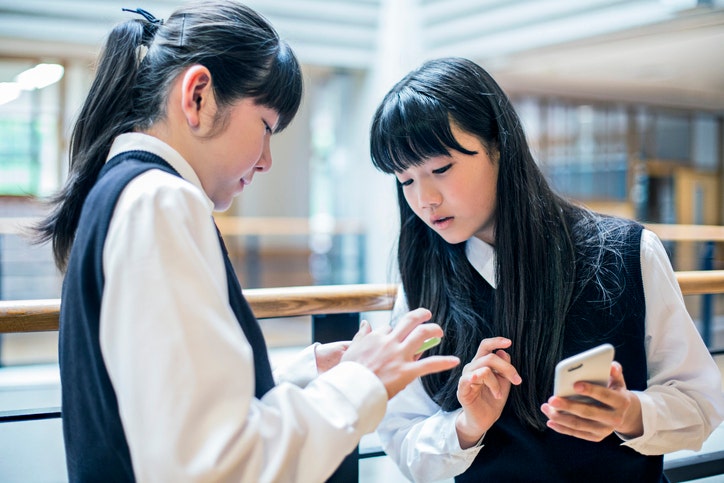
Welcome to Computing's weekly roundup of tech news in Asia. This time we look at South Korea’s incoming law that will ban smartphone use by students during school hours and China’s chip pledges.
South Korea has become the latest country to pass a bill banning phones and smart devices during school hours to combat what it worries are signs of smartphone addiction among teenagers after a government study found that 43% of young people aged between 10 and 19 in the country show signs of dependency. It will give teachers the authority to enforce the ban but schools must also educate students on proper device usage.
The move follows similar restrictions implemented in Italy, the Netherlands and China, and is supported by some educators and parents, but others point to the stress-inducing effects of South Korea’s massively competitive education system where children work long hours in order to pass all-important exams as a cause of the so-called addiction. Phones are their social life. "There has been no real education about healthy use, just confiscation," one student told the BBC.
In Japan, meanwhile, the city of Toyoake plans a broader, more advisory approach to reducing screentime, recommending that all residents limit smartphone use to two hours a day outside of work and school for the good of their health, but stopping short of any enforcement measures.
In China the government is expanding its moves to reduce AI developers’ dependency on Nvidia GPUs, imploring its chipmakers to triple their combined output next year.
China
- China aims to triple its output of AI chips in 2026 to reduce dependence on Nvidia. Huawei is set to add two new fabrication plants. Source
- Nvidia rival Cambricon posted a 4,000% surge in revenue as Beijing looks to boost its domestic industry. Source
- Meanwhile Chinese AI developers are turning to second-hand and refurbished Nvidia GPUs as the government cracks down on their usage. Source
- New C6P CPUs, based on Intel's Granite Rapids platform but with additional security and tracking features, are to be released on the Chinese market. They are made by Montage Technology, through a partnership made with Intel back in 2016. Source
- State backed hacking group Salt Typhoon has expanded globally, infiltrating telecom networks in over 80 countries and compromising call records, communications and location data for widespread surveillance, the FBI says. Source
- Chinese hackers belonging to the UNC6384 group have been spotted using legitimate code signing certificates to install backdoors. Source
- Chinese social media is becoming inundated by AI-generated nationalistic propaganda. Source
- DeepSeek launched its v3.1 LLM. It boasts 685 billion parameters and uses a "mixture-of-experts" design for reduced load on inference. It is considered a serious competitor to OpenAI, the launch of whose GPT5 model fell flat earlier this month. Source
- Chinese women are urging the authorities to take down secretive Telegram channels such as “Mask Park Treehole Forum” which feature explicit images and videos of women taken against their will. Source
- Donald Trump threatened to impose a "200% tariff or something" on China if it restricts US access to rare earth elements and magnets. Source
- Temu has resumed shipping directly to the US after a temporary lifting of sanctions. Source
India
- IBM spinoff Kyndryl has said it will invest $2.5 billion in India over the next three years, with a focus on AI. Source
- New 25% US tariffs have been imposed by the US against India intended as punishment for the country purchasing of Russian oil and taking total tariffs to 50%. Source
- Amit Kapur has been named as the head of TCS's newly formed AI unit. Source
- A group of Indian gaming companies has come out in support of the country's new law prohibiting online money games. Source
- A parliamentary committee has called for legal provisions to tackle deepfakes and other AI-generated content seen as socially destabilising. Source
- OpenAI has announced the launch of its Learning Accelerator programme in India, distributing 500,000 ChatGPT licence to students and teachers. Source
Japan
- The local government in the city of Toyoake is planning to issue advice that all its citizens limit their smartphone use in a move designed to support parents who struggle to limit their children's screen time. Source
- Two of Japan’s largest media groups, Nikkei and Asahi Shimbun, are suing Perplexity over alleged copyright infringement, claiming the AI search company scraped content illegally from and ignored preventative systems. Source
- Tokyo Electron has denied involvement in an alleged theft of trade secrets from TSMC by a former employee who now works at the Japanese chipmaker. Source
- Following a claim by Russia-based ransomware gang Qilin that it had stolen 4TB of data from Nissan Japan in August, the company confirmed has confirmed that it suffered a data breach. Source
- Japan’s Nuclear Regulation Authority is exploring using AI to inspect nuclear facilities. Source
South Korea
- South Korea is to ban the use of smartphones in schools as part of a bi-partisan effort to reduce smartphone addiction among teens. Source
- SK Telecom has been fined a record 134.5 billion won ($97 million) for negligence after personal data of 27 million users were stolen. Source
- Chipmaker SK Hynix has begun mass production of its 321-layer 2Tb QLC1 NAND flash product, claiming a "new benchmark in NAND density". Source
Elsewhere in Asia
- Indonesia: Indonesian employment platform Pintarnya, which matches jobseekers with jobs and includes access to financial services, has raised a $16.7 million Series A funding round. Source
- Malaysia. Malaysian chip design company SkyeChip has announced its first edge AI processor. The country has recently increased its investment in AI. Source
- North Korea. The US has sanctioned an international fraud network said to be behind North Korean efforts to embed hackers posing as tech workers in US firms. Source. Source