EU softens tough tech rules amid pressure to boost growth
Big Tech’s influence is reshaping Europe's approach to digital regulation
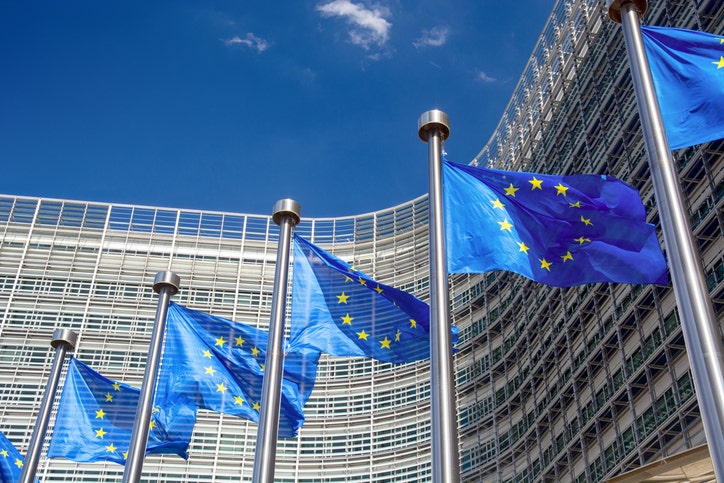
The EU is moving to scale back key elements of its signature privacy and AI laws.
The proposal, unveiled by the European Commission this week, signals a recalibration of the bloc's hardline stance toward Big Tech as leaders struggle to revive economic growth and keep pace in the global AI race.
For nearly a decade, Europe has prided itself on setting the global standard for digital rights through far-reaching legislation like the General Data Protection Regulation (GDPR).
But in the face of intense lobbying from Silicon Valley giants, direct pressure from the US government and internal calls for economic revival, the Commission is now proposing to loosen some of those very rules.
The proposal would revise several "core elements" of the GDPR.
Most notably, it would make it significantly easier for companies to share anonymised and pseudonymised datasets, a longstanding request from both industry groups and government innovation bodies.
The Commission is also seeking to give AI developers explicit legal permission to use personal data to train models, provided other GDPR protections continue to apply.
While this does not fully dismantle existing safeguards, critics argue it opens the door to wider uses of personal data the GDPR was meant to tightly limit.
Proposals could loosen AI Act
The reforms may also delay enforcement timelines in the EU's landmark AI Act.
Rules intended to govern high-risk systems had been scheduled to take effect next summer. Under the new proposal, they would only become enforceable once regulators determine that the necessary technical standards and compliance tools are available.
That open-ended delay could push meaningful oversight back by months or even years, weakening what had been billed as the world's toughest AI rulebook.
Cookie rules simplified
One element of the overhaul, however, is being welcomed by users and companies alike: major changes to Europe's cookie banners.
Under the plan, certain "non-risk" tracking technologies will no longer require pop-ups at all.
For others, consent management could shift to centralised browser-level settings, reducing the constant interruptions that have become synonymous with European web browsing.
The reforms are packaged inside a legislative bundle dubbed the Digital Omnibus, which also includes:
- Streamlined AI documentation requirements for small and mid-sized firms,
- A single interface for reporting cybersecurity incidents, and
- Stronger centralisation of AI oversight under the EU's newly created AI Office.
Commission Vice-President for Tech Sovereignty Henna Virkkunen defended the proposal as necessary modernisation.
"We have all the ingredients in the EU to succeed. We have talent, infrastructure, a large internal single market. But our companies, especially our start-ups and small businesses, are often held back by layers of rigid rules," she said.
"By cutting red tape, simplifying EU laws, opening access to data and introducing a common European Business Wallet we are giving space for innovation to happen and to be marketed in Europe. This is being done in the European way: by making sure that fundamental rights of users remain fully protected."
Behind the scenes, the deregulatory turn follows months of intense lobbying from US tech giants and personal interventions from former American president Donald Trump.
Influential figures within Europe have also pressed the bloc to loosen regulation they say is stifling innovation and competitiveness.
The proposal now moves to the European Parliament and the EU's 27 member states, where securing a qualified majority could prove contentious.
Negotiations are expected to stretch for months, and could introduce substantial revisions.
Computing says:
The USA and China are both racing to be the fastest in the AI space, but that was never going to be the EU’s competitive advantage; instead, the bloc had always intended to be the safest.
That now looks like it may be watered down, but this isn’t a regulatory free-for-all – yet. The foundations of both the AI Act and GDPR remain firmly in place, with these reforms specifically targeted to reduce the burden on businesses.
There has been a softening of attitudes towards AI regulation in the last 12 months, and the EU risked being locked out of any chance of competing on the world stage if it hadn’t had the flexibility to adjust its rules.