Japan’s ‘weird’ websites - Asian Tech Roundup
Plus: Chinese hackers hit the foreign office, report
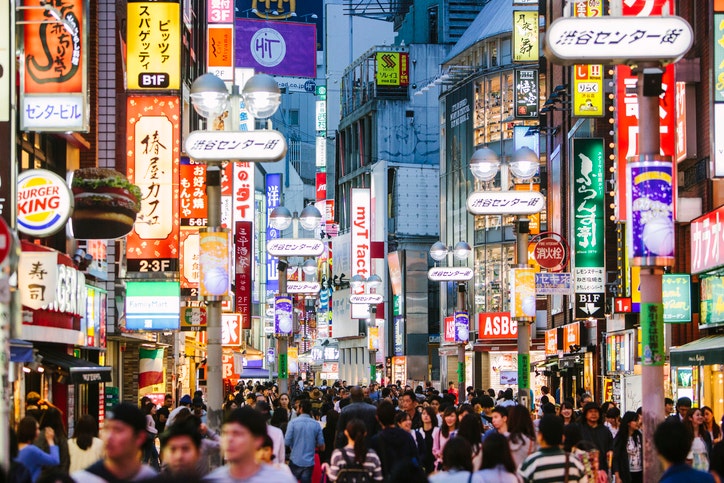
Welcome to Computing's weekly roundup of tech news in Asia. This time we look at Japan’s oddly retro (to Western eyes) websites, China’s reverse engineering of top-spec chipmaking equipment and North Korea’s ill-gotten crypto hoard.
Japanese websites can be baffling to newcomers. In a country known for Zen, exquisitely presented cuisine and hyper-efficient transport, its web presence is, at first glance, the opposite of all these things.
Text-heavy, icon-strewn and with a riot of information presented in no apparent order, many sites seem like a throwback to the 1990s. And that’s the way the Japanese like them.
In a fascinating article for The Japan Times, designer Thu-Huong Ha explores why Japanese websites look so ‘weird’ to outsiders, and how design language can get lost in translation.
Whereas western web designers infer quality and luxury using minimalism and “negative space”, in Japan this may be seen as “lonely,” unfinished or untrustworthy. In that country the taste tends toward the maximalist, with as much information as possible packed into the available space. Rather than being led on a journey, users like to see all the options before making a choice – something that space-efficient Kanji excels at.
Early web design software was slow to incorporate Kanji, meaning Japanese websites have evolved in a unique and not always very practical way, but an innate conservatism and aversion to criticism has led companies to avoid messing with their web presence unless they really have to.
Away from the niceties of design, North Korea’s hackers will be celebrating a bumper year for crypto booty - $2 billion compared with $1.3 billion in 2024 – achieved by successfully embedding IT workers inside crypto services and targeting executives with impersonation techniques.
There are reports that Chinese hackers penetrated the foreign office in October.
And there are reports that Chinese engineers have managed to replicate ASML’s world-leading chip-production machinery, which would allow the country to close the gap still further on standard bearers like Nvidia.
Australia
- Having been banned from many social media sites, Aussie under-16s are adopting alternatives like Lemon8, Yope, Coverstar, RedNote (Xiaohongshu) and WhatsApp. Source
- Reddit has issued a legal challenge against the social media ban, saying the law infringes on Australia’s implied freedom of political communication. Source
China
- The Sun reports that Chinese hackers accessed the UK Foreign Office in October. Source
- Chinese techies have reverse-engineered ASML’s extreme ultraviolet lithography machines (EUVs) to create the country’s own advanced chip facilities which are currently being tested, according to reports. Source
- Chinese chipmaker MetaX, founded by former AMD executives, jumped 700% on its market debut in Shanghai thanks in part due to the government’s push to displace Nvidia. Source
- China has gone from spending nothing on nuclear fusion research five years ago to being by far the world’s biggest spender today. Source
- According to state broadcaster CCTV, China has created an underwater data centre off Hainan Island with enough compute power to support 7,000 conversations per second with DeepSeek. Source
- Sticking in Hainan, a factory is being set up in that province to construct up to 1,000 satellites a year to give China a quick route to compete with Starlink and others. Source
- In yet another about-turn, US President Trump has approved the sale of Nvidia H200 chips to China. Source
- The Republican chair of the US House of Representatives’ China committee, John Moolenaar, questioned Trump’s latest flip-flop, saying it will provide China with a major advantage. Source
- Payment service Alipay and smart-glasses maker Rokid have created a payment platform to allow AI developers to integrate payments into smart devices. Source
- Cyber-espionage group Ink Dragon is using misconfigured Microsoft IIS and SharePoint servers to spy on European governments, according to Check Point. Source
- Microsoft 365 services including Teams, Outlook, OneDrive and Copilot were disrupted for users China and Japan on Thursday, due to a routing issue affecting the company’s infrastructure. Source
India
- Flipkart’s bid to shift its domicile back to India from Singapore ahead of its planned IPO has been approved by Indian authorities. It still requires approval from Singapore. Source
- Indian investors are piling into ecommerce and food delivery stocks. Source
- Google has entered India’s credit card market with the launch of Flex by Google Pay, a payments card co-branded with Axis Bank. Source
- The Reserve Bank of India’s deputy governor T. Rabi Sankar said that stablecoins do not offer any advantages to the financial system that central bank digital currencies (CBDCs) can’t do better. Source
- The Centre for Development of Advanced Computing (CDAC) unveiled its latest RISC-V based processor, announcing the DHRUV64 as its most advanced home-grown effort yet. Source
- A government committee is reviewing India’s 1957 Copyright Act to identify legal and policy issues arising from the use of AI and make recommendations for possible changes. Source
Japan
- Why do Japanese websites look so cluttered and “weird” to outsiders? The Japan Times looks at cultural, technological and aesthetic differences between East and West. Source
- Investment company Itochu has signed a deal with Castrol to accelerate the adoption of liquid cooling for datacentres in Japan. Source
- A new law has come into force that bans Apple and Google from blocking third-party app stores on iPhone and Android devices sold in Japan, and requires them to offer multiple defaults from browsers and search engines. Source1 Source2
- Honda has announced it will stop car production in China and Japan due to an ongoing semiconductor shortage. Source
- NTT plans to deploy more than 1,000 self-driving buses and cars across Japan by the 2030s, to alleviate a shortage of drivers. Source
South Korea
- South Korea and the US have reached an agreement to co-develop low-cost autonomous underwater drones for the US Navy as part of an effort to offset China’s expansion in the Indo-Pacific. Source
- Kim Jong-cheol, tipped to lead South Korea's broadcast and media commission, said he plans to restrict access to social media by teenagers as part to ensure the public can "engage in communication in a safe and free environment and in an orderly manner." Source
Elsewhere in Asia
- Taiwan: TSMC is working to equip a second advanced 3nm semiconductor plant in Arizona for production, ready to begin operations in 2027. Source
- Malaysia: French energy company Total has signed a 21-year power supply deal with Google to supply 1 TWh of renewable energy to its data centres in Malaysia. Source
- North Korea: North Korean hackers stole a record $2.02 billion in crypto in 2025, a 51% year-on-year rise. Source
- Asia: Nearly all datacentres in Saudi Arabia and Malaysia are in regions that are too hot (>27 C average), while half of Indonesia’s 170 facilities and 30% of India’s are located in overly hot regions. Source