Government announces co-ordinated intervention to boost female tech talent
Because the tech gender gap won’t fix itself
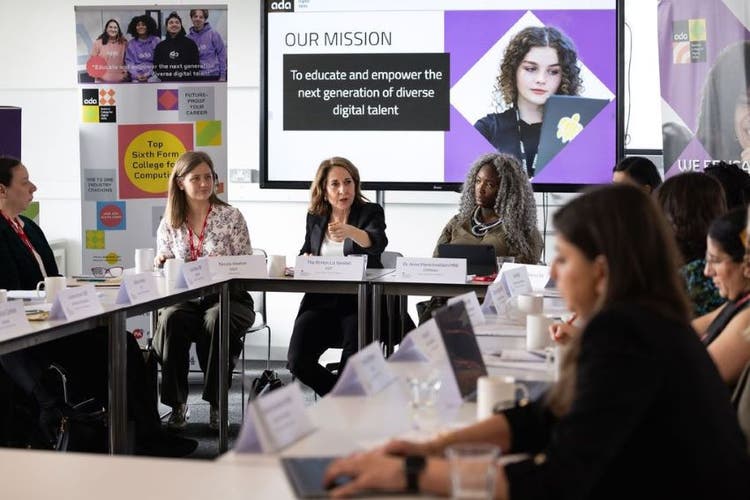
The government has announced a series of coordinated measures to encourage more women into tech, and to help keep them there.
Despite the efforts of campaigners and some truly outstanding individual success stories. women remain drastically underrepresented in Britain's technology sector. It’s not just an issue of fairness. Last year’s Lovelace Report put a figure of approximately £2 billion and £3.5 billion being drained from the UK economy every year due to female attrition from tech.
A package of measures announced today by Science and Technology Secretary Liz Kendall represents coordinated and long overdue government intervention on this issue.
The measures follow a meeting of the Women in Tech Taskforce, announced by Ms Kendall last Autumn which includes figures such as Stemettes founder Anne-Marie Imafidon and Code First Girls CEO Anna Brailsford.
The centrepiece of the package is the £4 million TechFirst Women's Programme, which will fund at least 300 paid placements in tech roles, with a focus on the SME sector. Each placement will last a minimum of six months, and participants will receive coaching and interview preparation support.
It’s a small number, but it constitutes substantive, employment-focused intervention. The emphasis on SMEs is interesting. SME’s employ the vast majority of the UK workforce but struggles against larger enterprise to find and retain tech skills.
Women returners
Alongside the TechFirst programme is a pilot for career returners. This is a scheme targeting skilled software developers who have been out of work for eighteen months or more.
In conjunction with the Home Office and Ministry of Justice, the pilot will offer senior government tech roles to those returning from career breaks, a cohort largely made up of women who have taken time out with young children.
The framing of this issue matters. Women returners are often treated as a problem to be fixed, with their skills being rendered outdated by the pace of change in tech. This scheme acknowledges that women returners are collectively an experienced and valuable resource, and that they face structural barriers to full participation in the industry and economy that desperately needs them.
Secretary of State Liz Kendall said:
"Women aren't being given a fair shot in tech - whether that's getting into the sector, staying in it, or returning after time away bringing up their families. If we don't address these issues now, we'll still be having this conversation in decades’ time and that isn’t good enough.
"We’re acting through a skills and jobs package to get more women into tech quickly. These aren’t warm words - they’re real jobs, real placements, and real routes back in through a door that has been too hard to open, for too long.”
The focus on women part way through their working lives is strategically smart. For years, employers have argued that they would love to employ women, but the pipeline of female talent just isn’t there. As Anna Brailsford argued recently, if your goal is to increase the numbers of women working in technology in the next three to five years, returners and mid-career switchers are where you must focus.
Longer-term, building the pipeline of female talent remains a priority, with the TechFirst Girls Competition, a national challenge for 12 and 13-year-old girls delivered in partnership with IBM. This year's predecessor - the CyberFirst Girls Competition - reached more than 10,000 students.
The ambition is to build on that reach, using AI and coding challenges to expose girls to technology not as an abstract career aspiration but as a practical tool for creative problem-solving. The age range is well chosen. Research consistently shows that girls begin to self-select away from science and technology subjects in the early secondary school years. This is typically influenced by social expectations and stereotypes rather than aptitude.
Evidence of harm
The Women in Tech Taskforce's Call for Evidence is also likely to prove timely and consequential. The Taskforce is soliciting evidence on how emerging technologies, particularly AI, embed and amplify gender bias.
This is not a niche concern. Technologists, parliamentarians, public policy think tanks and campaign groups have all expressed mounting alarm about how AI is disproportionately harming women by embedding, automating and scaling structural inequalities. Computing wrote about this for International Women’s Day, and some of the examples cited in the government's own announcement are striking: AI recruitment tools have been found to favour male candidates at a rate of nearly five to one, while models designed to diagnose liver disease were twice as likely to miss the condition in women.
These are not edge cases or theoretical risks. They are documented failures with real consequences for women's health and livelihoods, produced by technology built without their input.
Kendall’s statement continues:
"We’re not just fixing today’s problem. Through the Women in Tech Taskforce, I want to make sure women aren’t just entering this sector - they’re shaping it. Co-creating the technologies, the culture, and the future of an industry that for too long has been built without them."
Computing says:
Computing welcomes these measures. 300 placements and a pilot for women returners isn’t going to undo a century of stereotypes, societal expectations and systemic barriers. But it sends a signal to employers that women's participation in tech isn’t just a concern of campaign groups and the diversity and inclusion sector. It is a systemic problem which costs our economy billions annually.
It won’t be solved by calls for more role models, mentoring advice or with single initiatives that are as forgotten as quickly as they are announced. The gender gap in technology requires sustained intervention at multiple stages of women’s working lives. This is the first time that any government seems to have recognised that.