How British Cycling lost its legacy and got back in the saddle
‘Twenty years ago, our infrastructure was best in class’

Legacy infrastructure had slowed British Cycling’s digital efforts to a crawl. The organisation brought in external help to get back up to racing standard.
Few topics split public opinion like cycling. Depending on your preferred mode of transport, bike-users are either eco-conscious individuals doing their bit for the planet, or Lycra-clad roadblocks getting in the way of ‘real’ traffic.
But despite motorists’ protests, more of us ride a bike than not. Twenty-six million Brits have ridden a bike in the past 12 months, and six million in the last month. We use them for transport, to spend time with friends and family and – as anyone who has driven around Surrey on a Sunday morning can tell you – for physical activity.
Unfortunately for British Cycling, the sport’s governing body, its infrastructure was moving slower than a Surrey peloton. Stephen Brown joined the organisation as Director of Change (he is now Strategy and Operations Director) to tackle that in 2023, but it took more than 12 months for the real transformation to begin.
An uphill climb

“When I came in in October [2023], it was very much understood that the number one project is that we need to transform our digital infrastructure,” says Stephen.
“Our infrastructure, 20 years ago, was best in class within the sporting industry. The challenge with that is it hasn't been iterated on, it hasn't been improved, and effectively it is now a barrier.”
Whether riding a bike or working with data, visibility is important, and that was a major issue for British Cycling’s legacy systems.
“We are using a system to try and visualise data which is 20 years old. It doesn't allow us to see what we want to see, which is the single view of the rider... That has a huge impact on us, ultimately, being able to give you a best-in-class customer experience.”
Just one example of how that affects members is a lack of granularity; road cyclist, gravel rider or BMXer, everybody receives the same content.
“We want to get to the position whereby we can make it really personalised...so effectively you are getting exactly what you want. Your relationship with us is meaningful, it's relevant, and it resonates to what you're interested in.
“We can't do that at the minute because our system doesn't allow us to do that.”
Where the rubber meets the road
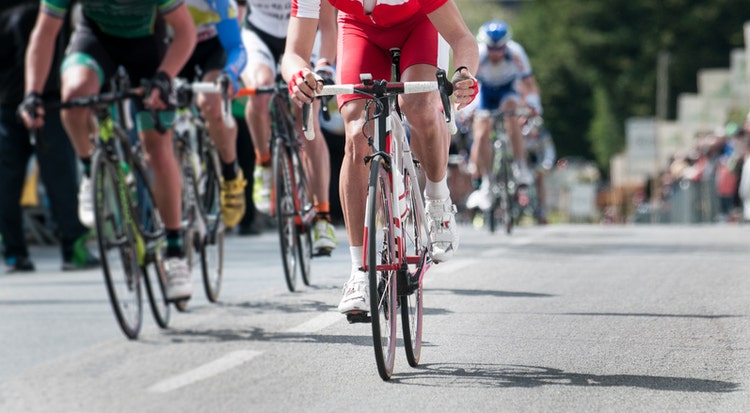
With legacy tech getting in the way of British Cycling’s mission to “bring the joy of cycling to everyone,” a change programme was necessary to boost reach, relevance and engagement.
The organisation launched a tender in July 2024 and signed on the dotted line with transformation partner Elixirr in December last year, aiming to get a handle on its data at a fundamental level before trying anything more ambitious.
“You've got to get the foundations right,” Stephen explains. “It would be no good for us to jump to a brand-new website if we fundamentally didn't have the capability of being able to interpret that information and that data and everything else to really align what our strategies will need to be going forward.”
Elixirr has been helping to guide the transformation in incremental steps, starting with the front-end website and eventually feeding through to customer engagement, marketing, a new club portal, events product, and a customer portal showing “everything about you and your history within British Cycling.”
There are also plans to roll out AI with Elixirr and British Cycling’s cloud provider Google – both as a customer-facing chat function and operationally “to create business efficiencies that allow us to work more effectively and efficiently across a number of key service areas.”
A tandem effort
There are almost 100 sporting governing bodies in the UK, but technologically most are “behind the ball,” highlighting the importance of work like that between British Cycling and Elixirr. Of all those bodies, Stephen thinks only the FA has a similar relationship with their transformation partner.
There were about 55 companies involved in the original tender process last year, and ultimately the successful firm wasn’t only judged on their past work: culture was just as important.
“It was really evident from the outset that Elixirr’s culture aligned with ours, and their interest in and knowledge of cycling was excellent...
“We’re really seeing the value of that now in the implementation phase.”