Experts call for structural change to widen pipeline of disabled tech talent
Enterprise tech leaders advised to reimagine how they describe, assess and measure work

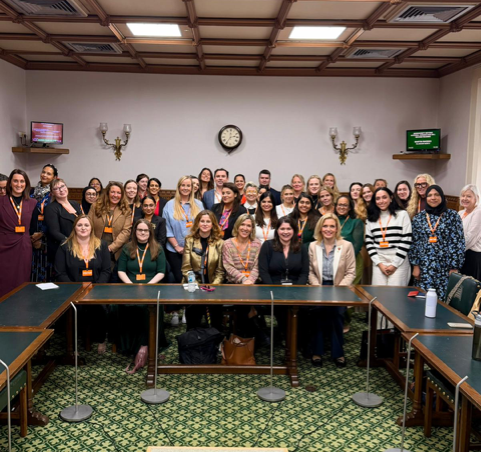
Women in Tech Week concluded last week with a powerful panel discussion at the House of Commons, hosted by WeAreTechWomen and sponsored by MP Samantha Niblett. The conversation centred on building inclusive and disability-confident tech careers and widening the talent pipeline into enterprise IT.
Kicking off the event, Karen Blake—Strategy, Change and Engagement Professional and former Co-CEO of the Tech Talent Charter—highlighted a key finding from a recent BCS report: around 88,000 people with visible and hidden disabilities are missing from the UK tech workforce, despite the sector’s pressing need for diverse skills and perspectives.
Blake acknowledged that there are many reasons that this talent is disconnected from the enterprise tech workplace but thinks that pay disparities have an outsized role to play in the mix.
"Without pay parity, you lose agency and choice," said Blake.
"We can’t say 'yes, I can work full-time' unless we’re paid fairly—so we can afford childcare, home support, decide when we retire, or what kind of accommodations we need. Financial autonomy is essential."

Blake linked this pay gap to a broader issue explored in The Lovelace Report, published earlier this year which examines the attrition of women in tech. What often appears to be a personal choice to step back, reduce hours, or leave the corporate world is not a choice at all—it’s a consequence of systemic barriers.
Chairing the panel, Dr Vanessa Vallely OBE, Founder of WeAreTechWomen, posed a key question: What does a meaningful framework for disability inclusion look like, and how can organisations be held accountable?
Amy Low, Chief Executive of AbilityNet, pointed to several existing frameworks, including the Disability Confident Scheme, guidance from AbilityNet and the Business Disability Forum.
"Disabled applicants need to know upfront that an employer gets it—before spending time and energy on an application ," Low said.
However, Low cautioned that inclusion efforts must extend into the entire employee lifecycle.
“There's a lot of emphasis on recruitment,” Low continued. “And then when people come to onboarding, there's no assistive technology for example. What about progression? You know, we have a glass ceiling above the heads of women and for disabled women it's even lower.
“Accreditation matters. It not only provides transparency through independent review but also helps disabled candidates avoid wasting time on employers that won’t support them.”
Changing demographics and the workforce
By 2030, over half the UK workforce will be over 50. As disability likelihood increases with age, tech employers must urgently adapt to a multigenerational workforce.
Cressida Stephenson, a disabled CEO and Founder of EdenChase Associates, argued that companies need to shift from hiring for "cultural fit" to "cultural add".
"We need to reimagine how we describe, assess and measure work," Stephenson said.
“Job descriptions focus too much on prescriptive inputs—degrees, years of experience—rather than outcomes. This creates an echo chamber and homogeneity in our teams.”
“We have to shift the focus from prescriptive inputs to inclusive outputs. Rather than telling me what this person needs to perform this job in terms of profile, tell me what the measurable outputs of success look like. Don't describe the person. Describe the role and what the measure of success looks like.
“When you do that, you’ve opened up the talent pipeline. “
Stephenson waned that these biases are exacerbated by AI recruitment tools. Disabled candidates often have non-linear career paths or portfolio careers—factors that automated systems penalise, pushing them out before a human ever sees their application.
Stephenson also highlighted a demographic shift with serious implications for hiring strategies:
1.2 million more people aged 50–64 will be in the UK workforce by 2030, whilst declining birthrates means that only 500,000 more people aged 15–29 will be entering the workforce.
Meanwhile, ageism in tech starts shockingly early—at just 29, according to some surveys.
“Talent acquisition teams are often under 35 themselves,” Stephenson said.
“This creates unconscious age bias across hiring practices.”
Bridging the Gap Between Policy and Practice
To drive meaningful change, Stephenson called for grassroots input into policymaking.
“You can’t solve a problem from 30,000 feet,” she said. “You need boots on the ground. Practitioners and policymakers need to sit at the same table—because those closest to the problem are closest to the solutions.”
Blake echoed the sentiment, urging a shift away from performative initiatives toward targeted, consistent work.
"This isn’t ‘buzzy’ work," she said. “It takes time, intention, and consistency. We’ve focused too much on initiatives and programmes without really looking to fix the core issues when really, we’re giving a car a paint job while the engine’s falling out.”
One high-impact, achievable goal? Pay parity. Crack that and you solve a lot of other problems. Speaking after the event, Blake suggested that any man wanting to be an ally to female colleagues should be prepared to reveal not necessarily his salary, but the percentage raise he has received.
Transparency is necessary for progress.
Assistive technology
Angela Matthews, Director of Public Policy at the Business Disability Forum, raised another critical barrier: access to assistive technology.
After interviewing 100 disabled graduates, Matthews found that many lost access to necessary assistive tech—such as screen readers, captioning tools, or braille displays—once they left education. This happens because access is usually provided though the Disabled Students Allowance and the only other way to access it is via the Access to Work scheme – which only kicks in once you’ve found a job.
“If you don’t walk straight into a job after graduating, you lose your tech,” Matthews said.
“Graduates are left unable to apply for jobs, becoming poorer by the day, despite having good or excellent degrees.”
Access to Work provides adjustments to enable work, many of which are assistive tech related. As the workplace becomes increasingly digitised, the only way a lot of disabled people can navigate it is with assistive tech. The problem is that it’s also very expensive, and Access to Work is currently being reformed by a government under immense pressure to reduce public spending. Most experts expect the scheme to be reduced to a shadow of its former self.
“Assistive tech should be seen as a necessity, not a privilege,” Matthews said.
Until then, if tech employers want to widen their talent pipelines, they will need to consider how they can fill this gap.
While discussions of disability inclusion are often framed as a moral issue, speakers made clear that it’s also a business essential. Without systemic reform, enterprise tech employers will continue to leak valuable talent—and miss out on the innovation, insight, and resilience that disabled professionals bring.
“The shape of our workforce is changing,” the panel concluded.
“Unless tech companies change with it—recruiting, retaining, and valuing a wider range of talent—the entire industry, and economy, stands to lose.”