Why hybrid leadership is the future of enterprise IT
3173 Group CTO Nick Rosser explains why technology leadership is inseparable from business change
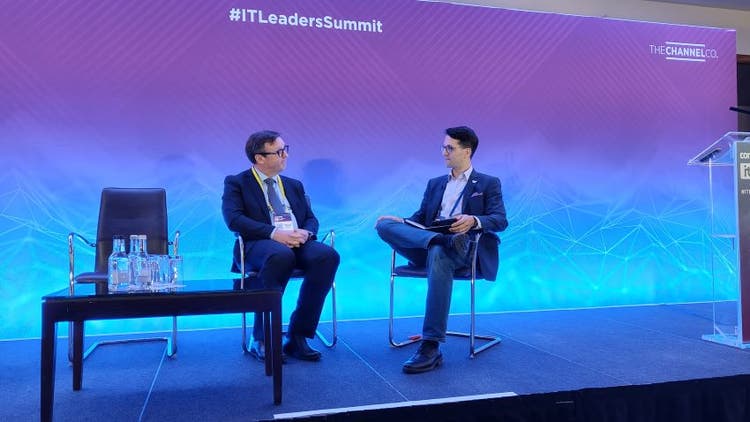
For Nick Rosser, Group CTO at 3173, the modern technology brief is much more than keeping the lights on. it is about helping shape and deliver business transformation.
In conversation with Computing Editorial Director Tom Allen, at the Computing IT Leaders Summit, Nick Rosser said even the “T” in his job title now carries a dual meaning. “The T in my title could be two things,” he said. “Firstly… technology… and the second part of that is transformation.”
Rosser’s role spans technology change, business change and the broader transformation agenda across the group. That blend, he argued, reflects the centrality of technology to organisational change. Whether a business is responding to regulation, improving a process or launching a new proposition, technology will be involved in the delivery chain, and that has changed what businesses need from senior IT leaders. Rosser said his own route into technology began from the business side and a with a deficit from the technical function.
“I was becoming frustrated with the technology function not delivering what we needed as financial advisors,” he said.
That background shaped his view that technology leadership must start with outcomes rather than the tools.
“Having somebody who understands the business outcome you’re trying to achieve, as opposed to just the technology delivery, is really important,” Rosser said. As business and technology become ever more closely aligned, he added, “it is impossible to do one without the other,”
For Rosser, the practical starting point is to “almost park technology to one side” until the business problem is clear. “Once you understand what the business problem is and where those business opportunities sit, then applying the technology to those outcomes tends to be my starting point,” he explained.
But the business and technology relationship cuts both ways. Sometimes business needs its technology leadership to be ahead of the curve. AI provides an obvious example.
Technology leaders, Rosser said, often see emerging waves before mainstream business stakeholders do, giving them an important role in translating hype into practical operational change.
“We’ve been speaking about AI today,” he said. “We’ve seen that coming down the line as technology leaders for quite a while. I was able to be a little bit ahead of the curve in that respect. We were talking about process optimization within the business so I was able to think about how AI could enable that.”
Transformation and technology as one
Hybrid leadership is not simply a matter of adding more responsibilities to an executive title. Rosser said organisations also need to rethink how technology and change teams work together. When he joined 3173 Group, he inherited separate technology and transformation teams - a structure he intentionally changed.
“Technology needs transformation. Transformation needs technology,” he said. Blending those teams, he argued, improves outcomes, efficiency and relationships because both groups are usually working on the same projects from different angles.
Communication, more than technical depth alone, is the capability that makes that possible. Rosser said hybrid leaders must be able to move between boards, business specialists, developers, database administrators and other technical teams without losing the thread of the problem. “The ability to be able to communicate a really complex area in a simple way is vital,” he said.
That also means technology leaders need senior influence at an earlier stage of decision-making. Rosser said a board-level or senior strategic seat allows technology and transformation considerations to be built into ideas while they are still forming. “Without it, you can often inherit decisions that are ultimately already made,” he warned.
Demanding leadership
Hybrid leadership is demanding. In response to an audience question Rosser was candid about the pressure of spanning several disciplines at once. “It’s stressful. There’s no question about that, and it is always a question of judging priorities,” he said. He also said that hybrid leaders must constantly be on guard against falling back into their comfort zones – which is often likely to be the technology.
“I think you truly have to hold yourself accountable in terms of the priorities you're working through, because otherwise you will fall into the trap of focusing in one area more than more than another. “
Strong teams are essential, he said, not only to provide specialist expertise but to keep leaders honest about where attention is needed.
Technology leadership now sits at the heart of business change. The leaders who will have the greatest impact are those who can connect technical possibility with commercial priorities, communicate across the organisation and keep transformation focused firmly on outcomes.