AI PCs: Next iteration of the endpoint or part of a wider enterprise IT strategy?
Or both?
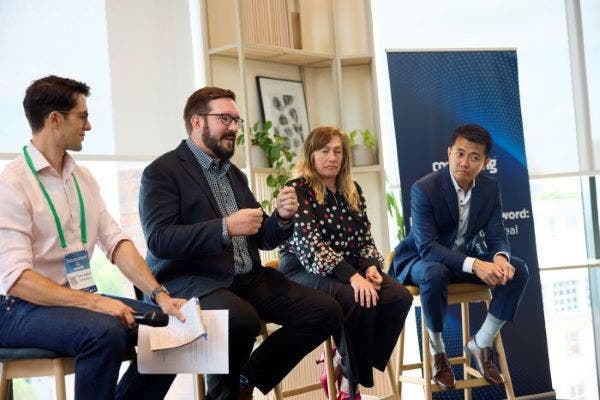
A panel at a recent event for enterprise tech leaders discussed some misconceptions about AI PCs, highlighted some use cases and addressed some concerns about security and governance.
Is there a misconception about what an AI PCs is? This was the first question put to a panel by Computing Editor Tom Allen, at a recent event for enterprise tech leaders focused on unlocking the business benefits of Windows 11 migration and AI PCs.
Keith Toh, Windows Pro and Edu Category Lead for Microsoft DPSS UK took the opportunity to separate the hardware performance benefits from other AI functionality.
“People associate AI PC’s with generative AI,” said Toh, “but what makes an AI PC is the NPU. The first thing that an NPU does is work perfectly with a CPU and GPU to optimise and distribute workload, so you get the best performance with a long battery life.
“In terms of functionality, what’s exciting is that AI experiences are made of building blocks around the likes of semantic indexing, natural language models, textual image contextualization. Today, you have the ability to put these building blocks together to create your own AI experiences within your own AI PC. “
Do AI PCs represent just the next evolution of the endpoint, or do they signal a wider shift in enterprise IT strategy?
Anthony Taylor, Digital Workplace Strategy Lead at Insight, thinks these devices are going to be an important plank of enterprise strategy in the years ahead.
“I don't think OEMs will provide a choice,” he said, “because I think NPU use will be standard as part of the platform, because they do give you more performance and more battery life. It isn't just some flash in the pan. This is happening. It will become about how you leverage this technology in your business.”
Be clear on the problem you’re trying to solve
If AI PCs are inevitable, then the question becomes one of timing, and as Gill Holloway, EMEA Vice President of Partnerships at Insight emphasises, that’s going to be unique to your business.
“I think that it's the persona mapping that's going to be pivotal in scheduling that journey to Windows 11 and to AI PC adoption,” she commented. ”I think if you're in a highly regulated industry, if you are in an industry that has language differences or highly disparate global users, the capability of the AI PC levels you up and helps you do things faster.”
Keith Toh provided an example to illustrate the point that use cases will be specific to departments within companies.
“We work with a bank which has branches in more rural areas of the UK, where they have many customers that can't speak English. They have internet problems and language problems. They're now using Copilot plus PCs to be able to train a live translation model to use that to help them interact with their customers.”
Anthony Taylor raised the prospect of different workstreams converging and acting as a catalyst for wider adoption.
“You've got the OEM work stream, which is where they're looking at how to add value to the NPU. You've got the software workstream, so companies like Microsoft and Adobe looking at how they can add value. Then you’ve got the bespoke workstream which is all about your specific use cases that would benefit from being run on a local chipset.”
In response to an audience question about the security implications of more widespread NPU adoption, Keith Toh said he considered the transition to Windows 11 and AI PCs to be a useful opportunity to examine security across the board.
”Think about how you run your data loss protection policies. Think about identity and access how do you think about security breaches.”
Anthony Taylor agreed, commenting:
“When you talk about security of the endpoint, it is about governance and how you do security by design. If you've got bad governance and security policies, someone is going to be able to search up your CEO's salary because you've done a bad job with your data. Security will always be the number one concern, but it is an opportunity is take a fresh look, ask difficult questions and modernise.”
What closing words of advice did the panel have for the AI curious community?
“Do pilots and prove your ROI.”
“Don’t try and take short cuts. It’s a journey that must be planned. “
“Be clear about the problem you are trying to address. A device in itself is not a solution to anything.”
Excellent advice for IT leaders to take away.