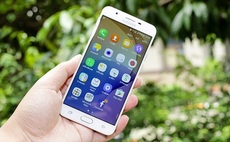
The HTC’s Flyer is a seven-inch tablet device, running the Android 2.3 Gingerbread operating system but overlaid with HTC's proprietary Sense GUI. It was launched in May in the UK.
Our unit was a 32GB model costing £600 + VAT, but there is a cheaper 16GB model. Both models have 3G and Wi-Fi connectivity, but there was no SIM on our unit.
The HTC Flyer has the look and feel of a small iPad; we always have wondered why Apple didn’t put out a smaller version that device. The seven-inch screen is sharp and runs at native resolution of 1024x600.
It has a MicroSD slot, supporting cards up to 32GB, which is accessible only by removing the white plastic fascia covering the on/off switch. The fascia also covers the headphone jack and the rear-facing 5-megapixel auto-focus camera.
The plastic clips on this fascia could easily be broken, so users won’t want to be continually opening up the back.
There is a pen stylus with the Flyer, which operates some touch functions. But other functions, such as shortcuts, are operated by touch. You can use the stylus to sync audio recordings with any text you type while recording.
The only connectors on the Flyer are a micro-USB 2.0 slot for connecting the AC adaptor or a micro-USB-to-standard USB connector and an audio headphone jack. There are also two thin control buttons on the right hand side of the Flyer for increasing and decreasing the audio volume.
The Flyer is powered by a Qualcomm SnapDragon single core 1.5GHz processor and has 1GB of system memory. It has an internal GPS antenna, and wireless connectivity is through IEEE 802.11b/g/n hardware and Bluetooth v3.0. There's also the standard accelerometer, and digital compass on board.
Users can easily add POP3 or IMAP email accounts, and there's Microsoft Exchange ActiveSync account support for over-the-air syncing of calendar, contacts and email. There's also Flash and HTML5 support with the Flyer.
In terms of the user friendliness of the device, the Flyer has a slick, responsive interface, which is not worlds apart from Apple's iPad 2. HTC's Sense GUI also adds an extra dimension to the Android OS, making transitions from the home screen to neighbouring screens easy and smooth.
The 5-megapixel camera on the Flyer is not fantastic, however, and the photos we took with it came out quite blurry. But aside from the plastic panel, it's quite a sturdy device.
If you have a SIM-card, the Flyer supports the HSPA+ standard, which would mean better mobile data transfer than the majority of the UK's HSDPA and HSUPA networks. That is – if your mobile operator rolled out the HSPA+ standard out over their Radio Access Network (RAN).
Conclusions
The HTC Flyer has a great form factor, but is slightly let down by not having Honeycomb, the latest Android OS. The user interface was easy to use, and Sense does add good extra functions to the OS.
It is also nice to see MicroSD support and a micro-USB connection as well, which allows you to get content off the device easily.
By adding in Flash and HTML5 support, the Flyer is an iPad contender.