This site uses cookies. By continuing to browse the site you are agreeing to our use of cookies. > Find out more here


Apple-Samsung case restarts today

By Graeme Burton

06 Aug 2012

View Comments
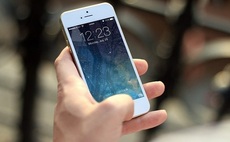
The iPhone 4v and the Samsung Galaxy smartphone

The trial between Apple and Samsung restarts today with a slimmed down crowd compared to last week, with Samsung's lawyers questioning their own designer, Peter Bressler.

Further reading

Last week's session closed with Samsung chief strategy officer, Justin Denison, denying that the company had copied Apple in the design of its Galaxy phones and tablets.

That followed the revelation that Apple's co-founder and former CEO Steve Jobs had changed his mind about producing a "mini-iPad" and then subsequently came round to the idea of producing a smaller, 7in iPad.

Apple's lawyers had earlier tried to have the case settled in Apple's favour due to the repeated "sanctioning" of Samsung by the court judge; first, they claimed, for destroying evidence; and later for releasing information to the press that had been rejected by the court because it had been filed too late.

That move, however, was rejected by Judge Lucy Koh.

The material Samsung released to the press was intended to demonstrate that plenty of "prior art" similar to the first Apple iPhone existed before Apple formally launched the iPhone. These included a Samsung design, called the Ultra Smart F700.

Samsung also claimed that the development of the iPhone was inspired by a Samsung "fashion phone" produced with Bang & Olufsen. Apple's then-CEO Steve Jobs had described in a memo the idea of a dial of numbers around an iPod-style "click wheel".

"This may be our answer – we could put the number pad around our click wheel," Jobs wrote in his memo to Jony Ive and Apple designer Bas Ording. "Of course we should orient it like a watch, with 3, 6, 9, and * [instead of 12] in the pure horizontal and vertical positions, just like any clock."

In total, more than 40 iPhone and iPad designs and prototypes were produced by Apple before it settled on its version one products. According to Apple designer Christopher Stringer, the aim of the design team at Apple tasked with creating the first iPhone was to create a "new, original, and beautiful object" that would be "so wonderful the you couldn't imagine how you'd follow it".

He also revealed, however, that the group did not necessarily have the full support of Jobs. He had voiced doubts about the project before launch and one of the issues – the scratch resistant screen – was only solved weeks before production was to start.

The iPhone was such an original product, Stringer claimed in court, that Samsung had ripped off Apple. "It's a huge leap in imagination to come up with something new," Stringer told the court. "That's what we did."

[Turn to next page] 

Reader comments

blog comments powered by Disqus

Newsletters

Does Google know too much about you?

Google's linked data policy, which came into effect on March 1, allows the company to collect information about its users across all its products, services and websites and store it in one place. This has been criticised by organisations ranging from CNIL to Microsoft, all of whom have expressed concerns that it's difficult to tell which data Google collects and how it's used. Now the Information Commissioner's Office is investigating whether Google's privacy policy is compliant with UK law. Are you worried that Google knows too much about you?

41 %

5 %

15 %

39 %