A host of new innovations, previously only witnessed in sci-fi movies, are being showcased at the Royal Society's Summer Science Exhibition, including spectacles that could help blind people see and materials that will make objects invisible, akin to Harry Potter's invisibility cloak.
And chief information officers (CIOs) will need to be aware of these technologies as they will be making their way into businesses in the near future.
According to the scientists working on these projects, each initiative needs to have a business purpose in order to warrant its funding in these times of austerity.
CIOs would do well to keep an eye on emerging technologies being developed in the lab that could revolutionise their organisations.
Among the technologies on show at the exhibition is a project on energy harvesting, developed at the National Physical Laboratory, which sees vibration, movement and sound being captured and transformed into electrical power using piezoelectric materials (materials that enable a voltage to be generated by mechanical stress).
This has already seen one local council use such materials within a pavement to generate enough energy through pedestrians walking on it to power its street lighting. This brings the cost of powering electricity on that road to virtually zero.
Another project of potential interest to local councils is 21st century traffic control: the invisible referee. The Intelligent Transport System (ITS) employs cutting-edge sensing, computing and communications technology to monitor and improve traffic flow.
Using artificial intelligence and the mathematical modelling of road traffic, the technology allows local bodies to improve traffic flow to its optimum, thus decreasing congestion and traffic jams.
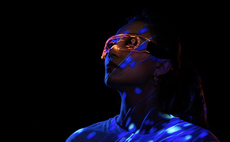
The spectacles that offer "interactive bionic vision" will be of great interest to the business operating in the pharmaceutical sector. Scientists at the University of Oxford have developed a non-invasive and low-cost prosthetic that may be useful for some people with very low vision.
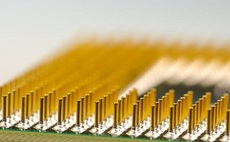
The device is worn like a pair of glasses and uses a small sophisticated computer using smartphone technologies, including an ARM Cortex chip as used in Apple's iPad, as well as cameras and LED lights, to understand what is in front of the user. The computer behaves like a small robot, seeking out things of interest and presenting them in a simplified way.
And scientists have also made the first prototypes of invisibility cloaking devices. By exploring the connection between geometry and light, scientists at the University of St Andrews and Masaryk University have created a cloak that is made out of materials that bend light rays around so that anything inside the cloak is hidden.
However, while the scientists developing the technology said they did so for their own curiosity and passion for innovation, they admitted that the most likely commercial use of this technology will be in the military and defence industries.
Bespectacled, wand-wielding schoolboys were not mentioned.
Have your say on this article
Newsletters
Latest stories from Management
You may also like
Management jobs
Technology Patent Wars
Case studies from large organisations across all sectors
... And rich media, and flexible working, and peaks in traffic ...
Upcoming Events
Join us for this Computing web seminar, in which the Head of BI at the Co-operative Group Nick Colebourn will be explaining just how he reigned in the Group’s sprawling database estate and how significant savings were realised and data quality improved as a result.
Date: 31 May 2012
Time: 11:00 AM
Live June 13th 11:00am: Register now. During this web seminar we will be looking at the sorts of incidents that can bring data centres grinding to a halt and what can be done about them.
Date: 13 Jun 2012
Time: 11:00 am
Receive the latest jobs direct to your inbox
Are you being paid what you are worth?