15 May 2003
I never won much as a child, so I was genuinely proud when I was chosen to represent my school on the BBC Domesday project.
The scheme was set up to mark the 900th anniversary of William the Conqueror's original Domesday Book in 1086 and was intended to provide a snapshot of British life in the late 20th century.
The snapshot included maps, images, data and textual portraits. I was asked to provide a description of my house in Hampton Magna, a small village outside Warwick, for the Domesday project.
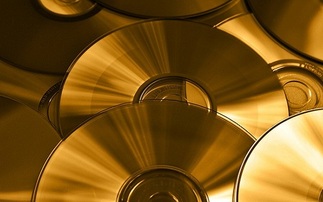
My parents and I visited the local library shortly after the project was completed and, using the Domesday Project's state-of-the-art interactive technology, an adapted BBC Master computer and LV-Rom video disc player, found my description.
It was great to know that I'd become a part of history. And because the project was stored on the latest IT hardware, we believed the information would be accessible to future generations for centuries to come.
Unfortunately, this was not the case. While the data in William the Conqueror's original manuscript is still accessible 900 years on, the pace of change in technology meant that the BBC Domesday project had become inaccessible by 2002.
Mid-1980s video disc technology had been superseded by portable compact disc systems. And the LDV hardware used to run the BBC project's video-discs was in short supply.
Thankfully, expert help was at hand. The Camileon project, based at the universities of Leeds and Michigan, has spent three years developing strategies for the preservation of digital materials.
The team was keen to develop a BBC Domesday emulation, where the look and feel of the original application would be replicated in a new environment.
"A lot of people thought that Camileon and its work with the BBC Domesday Project would put emulation to bed," explained project manager Paul Wheatley.
Access to the BBC Domesday data would prove these sceptics wrong. Wheatley and his team realised that they would need the original hardware to retrieve the information from surviving video discs.
"People think they'll be OK if they keep the discs," he said. But storing data on discs is never satisfactory. They are useless without an original hardware set-up that can be used to read the data, and BBC Domesday kit is hard to find.
LV-Rom video disc players are in limited supply because the hardware was more expensive than expected. Instead of costing £1,000, the Domesday cost about £4,000, which meant that fewer units were sold.
Many of the remaining players have disappeared over time, as the technology gradually became obsolete.
Fortunately, the University of Leeds' geography department still has one of the few remaining systems. But it hasn't been an easy ride for the Camileon team.
"About the time the project started, we had a look at the Leeds kit and it broke down," said Wheatley. "Throughout the project we really struggled to keep our hardware going."
However, publicity for the project at the end of 2002 proved vital. Members of the public contacted Wheatley and his team, and they suddenly found themselves inundated with original hardware.
When Wheatley's team opened a BBC Master for the first time, they found a modified turbo card that emulated a co-processor, and a non-standard SCSI card.
The scale of the task was awesome, but the Camileon team gradually began to make headway. "There were 60,000 pictures on each side of the disc," said Wheatley. "But once the software was working, it was just a case of occasionally tweaking it."
Data was transferred from the LDV player through the SCSI connection. The team used an early version of Linux, so that the PC recognised the connection.
With the data downloaded, Wheatley used an open source BBC B Micro emulator as the platform for emulation. This basic emulator was extended to run the BBC Domesday.
De-bugging the emulation of the BBC Master turbo card took several months, and hours of solid gaming proved to be crucial. A version of the classic arcade game Elite was used to check that the emulation of the co-processor was running effectively.
"We emulated what we needed to," explained Wheatley. "Sometimes we'd find that something important hadn't been supported. It was really a question of squeezing all that work into the small amount of time we had."
There's a few things that still need to be fixed. Wheatley points to occasional system crashes when people use the search facility.
"We wanted to demonstrate the principle - our aim wasn't to preserve Domesday for the future," he said.
But Wheatley admits that it would be nice, now that his team has completed most of the work, to take a step back and completely finish the job. "That's something we're looking into at the moment. It's a question of funding," he said.
There's also an issue of copyright, because different individuals and companies contributed to the Domesday's software and data, all which have diverse ownership interests.
The Public Record Office is interested and Wheatley indicated that it is looking at how Domesday could be used.
"It would be ideal if we could take a demonstrator forward and deliver it to the public," he said.
Thanks to the emulator, the BBC Domesday is available again. Now it's time to sort out the copyright situation and make its treasure trove of data accessible to us all.
FURTHER READING
News release detailing the to the BBC Domesday emulation project:
www.leeds.ac.uk/media/current/camileon2.html
Detailed contents of the BBC Domesday project:
www.atsf.co.uk/dottext/domesday.html
Have your say on this article
Newsletters
Latest stories from Storage
You may also like
Storage jobs
Technology Patent Wars
Case studies from large organisations across all sectors
... And rich media, and flexible working, and peaks in traffic ...
Upcoming Events
Join us for this Computing web seminar, in which the Head of BI at the Co-operative Group Nick Colebourn will be explaining just how he reigned in the Group’s sprawling database estate and how significant savings were realised and data quality improved as a result.
Date: 31 May 2012
Time: 11:00 AM
Live June 13th 11:00am: Register now. During this web seminar we will be looking at the sorts of incidents that can bring data centres grinding to a halt and what can be done about them.
Date: 13 Jun 2012
Time: 11:00 am
Receive the latest jobs direct to your inbox
Are you being paid what you are worth?